The past two years have been exceptional for Private Sales at Tarisio, and we see the summer as an opportunity to highlight a selection of the extraordinary instruments that have recently passed through our hands. To begin, we explore an iconic instrument that has shaped more than a century of chamber music and inspired countless generations of musicians and audiences: the magnificent ‘“Hauser, Roisman, Steinhardt’” Storioni. On an April afternoon not long ago, Arnold Steinhardt entrusted it to me at his home outside Santa Fe, and Tarisio had the privilege of selling it by Private Sale.
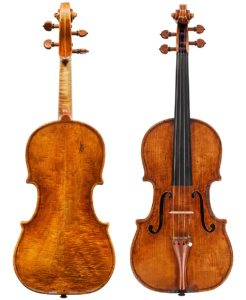
The ‘Hauser, Roisman, Steinhardt’ Lorenzo Storioni.
If there were ever a contest for the violin that had played the most quartet repertoire, I would nominate the c. 1785 ‘Hauser, Roisman, Steinhardt’ Storioni. For much of the past century, this iconic instrument stood at the head of two of the modern era’s most celebrated and prolific ensembles—the Budapest and Guarneri String Quartets—taking part in an almost unimaginable succession of performances and recordings.
The Budapest String Quartet endured for fifty years, from 1917 to 1967, and the Guarneri String Quartet for forty-five, from 1964 to 2009. Together they stood at the forefront of the first great age of commercial recording, when the quartet repertoire passed from the concert hall into homes around the world. Between them, they recorded virtually the entire canon, and generations of listeners bought those records and came to know the great works through their performances. In a very real sense, they learned this body of music through the voices of these two ensembles—and through the voice of this violin.
There is, however, an unexpected twist. This great Storioni began life not as a violin, but as a small viola, and was probably converted into a violin in the 19th century. Violists, so often the butt of the joke, may claim the last laugh: one of the defining violin voices of the recording era was, at heart, one of their own.
Violists, so often the butt of the joke, may claim the last laugh: one of the defining violin voices of the recording era was, at heart, one of their own.

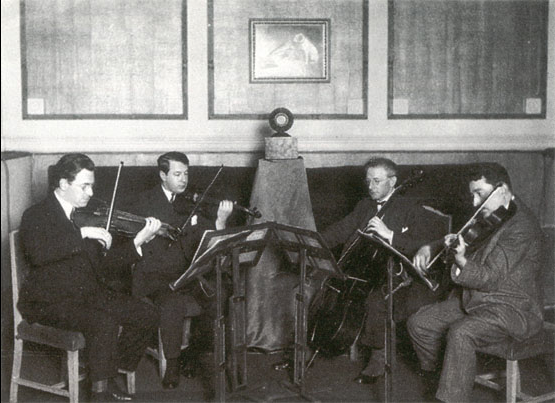
The Budapest String Quartet in 1919: Emil Hauser, István Ipolyi, Alfred Indig and Harry Son.
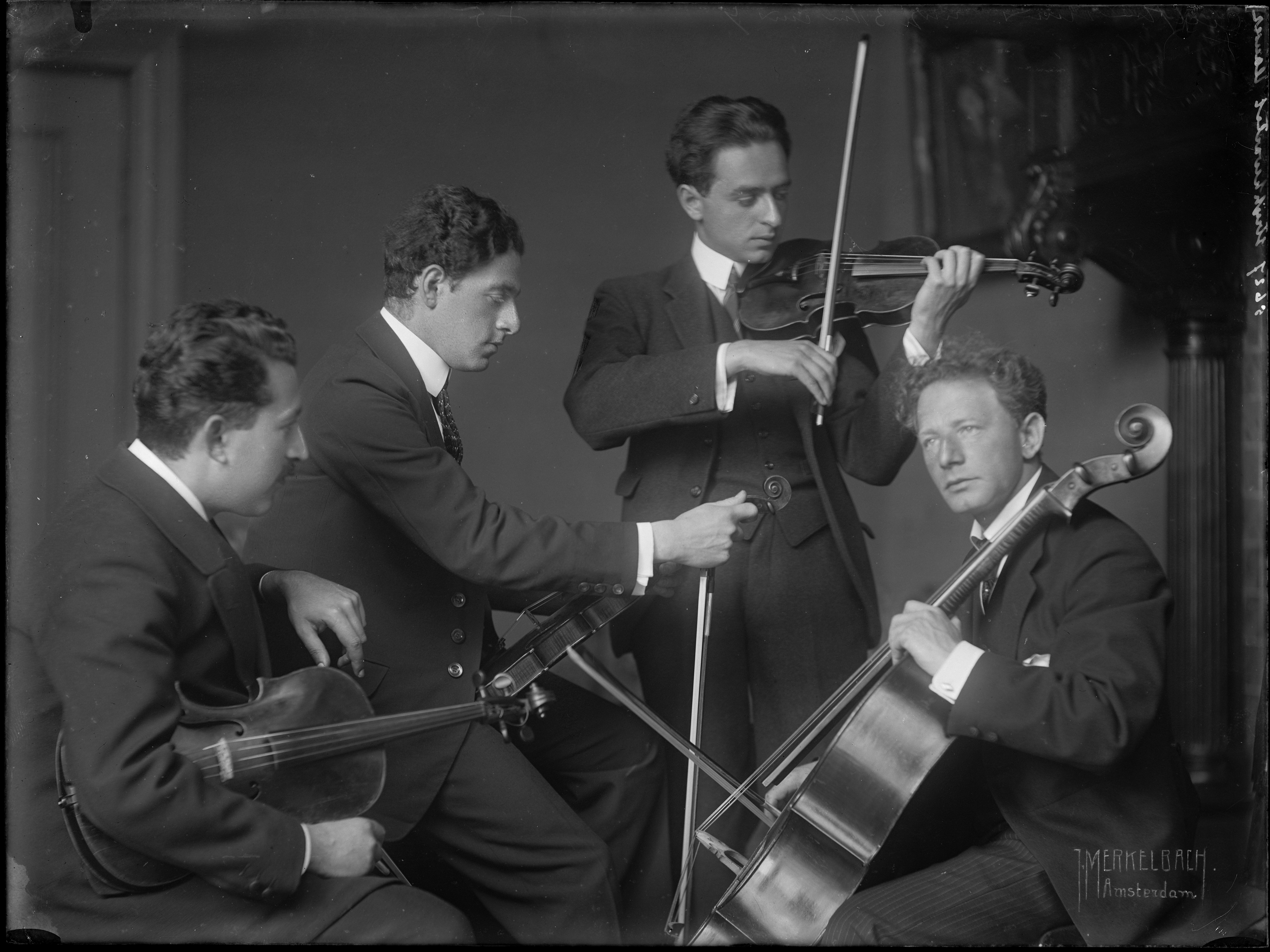
The Budapest String Quartet was founded in 1917, in the final years of the First World War, by four young musicians whose orchestral work had been disrupted by the conflict. Three were Hungarian and one Dutch, and all emerged from the rich musical culture that had made Budapest an important centre for string playing and chamber music. Their first concert took place in December 1917 in Kolozsvár, then part of Hungary, and from the outset they made the unusually bold decision to devote themselves entirely to the quartet. Four years later they moved to Berlin, and by the mid-1920s had begun to establish an international reputation.
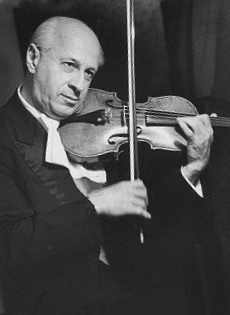
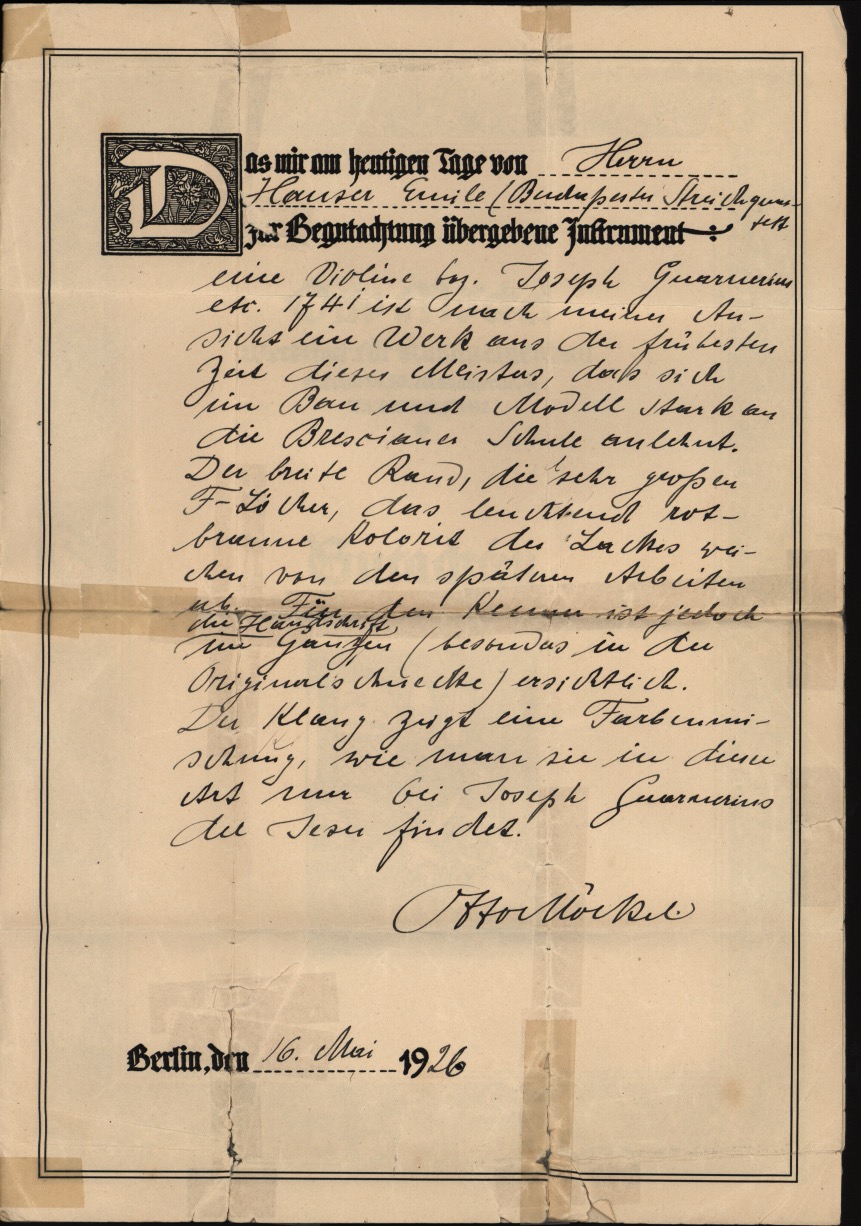
At the head of the ensemble was Emil Hauser, its founding first violinist and principal musical voice. Hauser led the quartet from 1917 until 1932, guiding it through its formative years, its move to Berlin and the beginnings of its international career. We know that the Storioni was in his possession by 1926 from a certificate addressed to him by the Berlin maker and dealer Otto Möckel. Möckel, rather optimistically, identified it as the work of Giuseppe Guarneri ‘del Gesù’, citing the long soundholes, the character of the head and what he perceived as the influence of the Brescian school. The attribution was wrong, though not entirely without insight: he had correctly recognized the Guarneri head, while misreading the body that carried it.
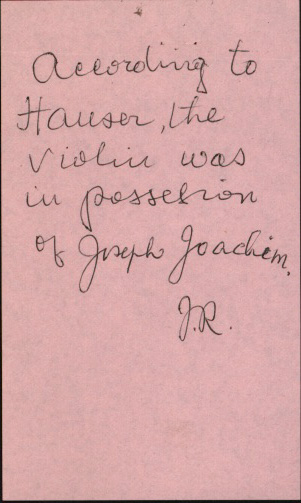
Joseph Roisman joined the Budapest String Quartet as second violinist in 1927 and, when Hauser left the ensemble in 1932, succeeded him as leader. The Storioni did not pass to Roisman immediately. Hauser took it with him, first to Jerusalem and later to New York, where he taught at Bard College and subsequently at the Juilliard School.
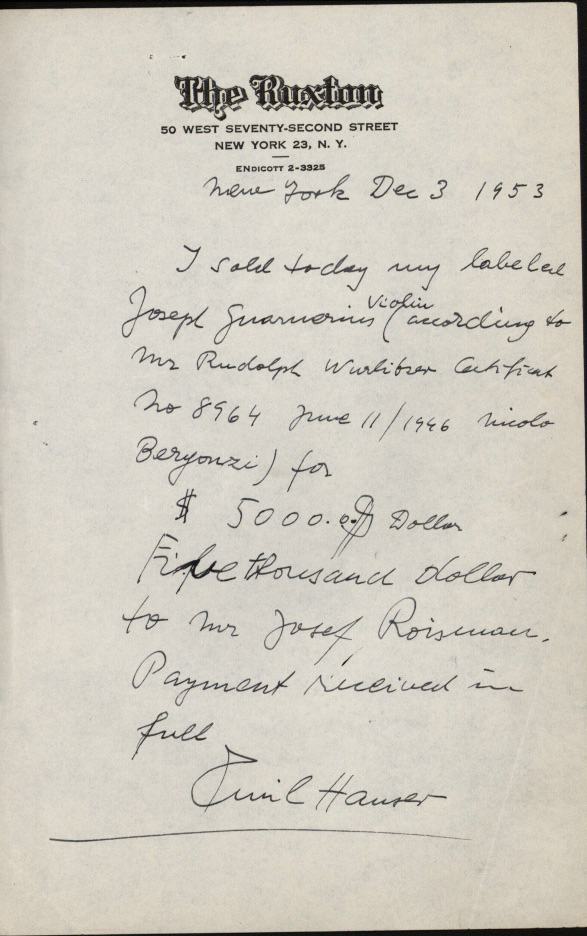
By the early 1950s, however, both men were again living in New York: Roisman still led the Budapest Quartet, while Hauser had long since left the ensemble. In 1953, Hauser sold the violin to his former colleague, recording the transaction in a handwritten receipt on stationery from the Ruxton apartment building on West 72nd Street. The instrument thus returned to the head of the quartet, now in the hands of the man who would lead it through the final and most celebrated decades of its career.
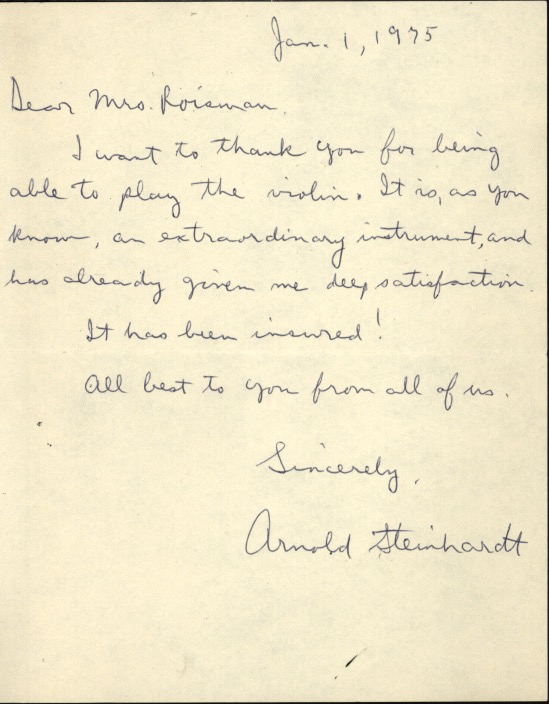
A letter from Arnold Steinhardt to Roisman’s widow, Pola.
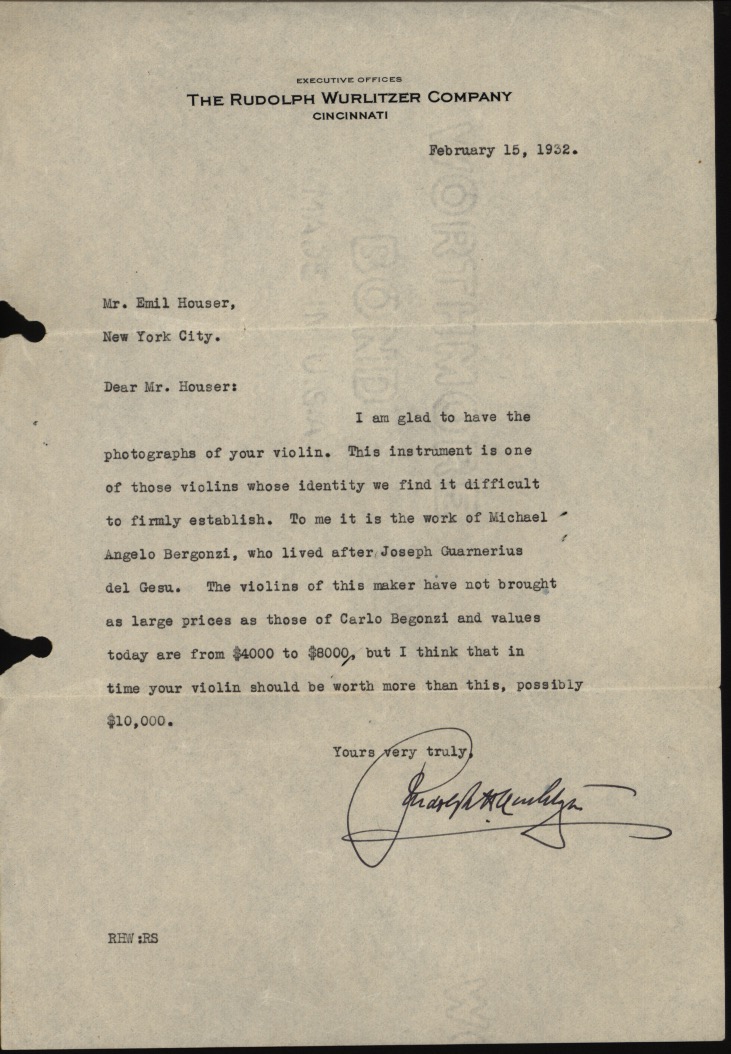
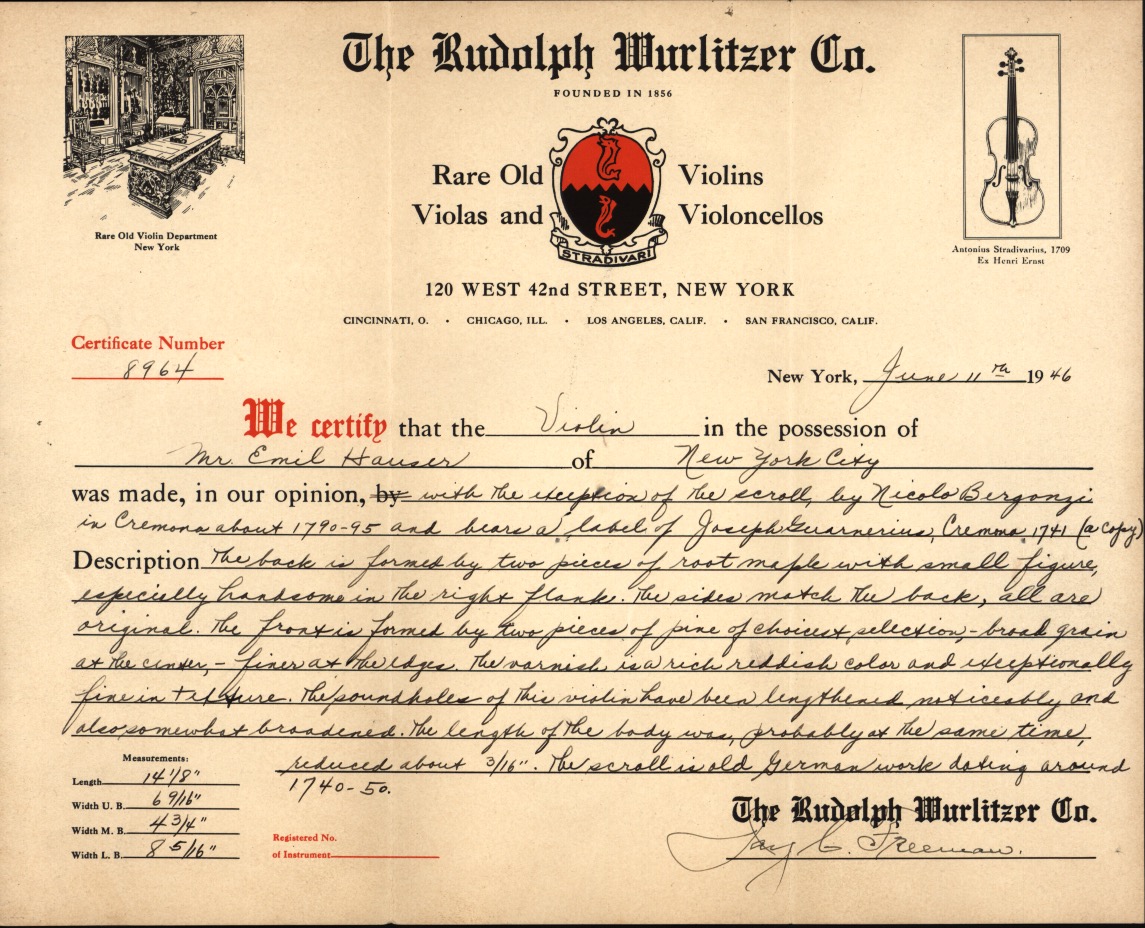
But its true identity was still not fully understood. In 1932, Hauser showed the violin to Rudolph Wurlitzer, who believed it to be the work of Michelangelo Bergonzi, the son of Carlo. Fourteen years later, the Wurlitzer company reconsidered the question and issued a certificate attributing it instead to Nicola Bergonzi, Carlo’s grandson and contemporary of Storioni. The violin was inching closer to its true identity, reflecting the rapid growth of expertise during the mid-20th century.
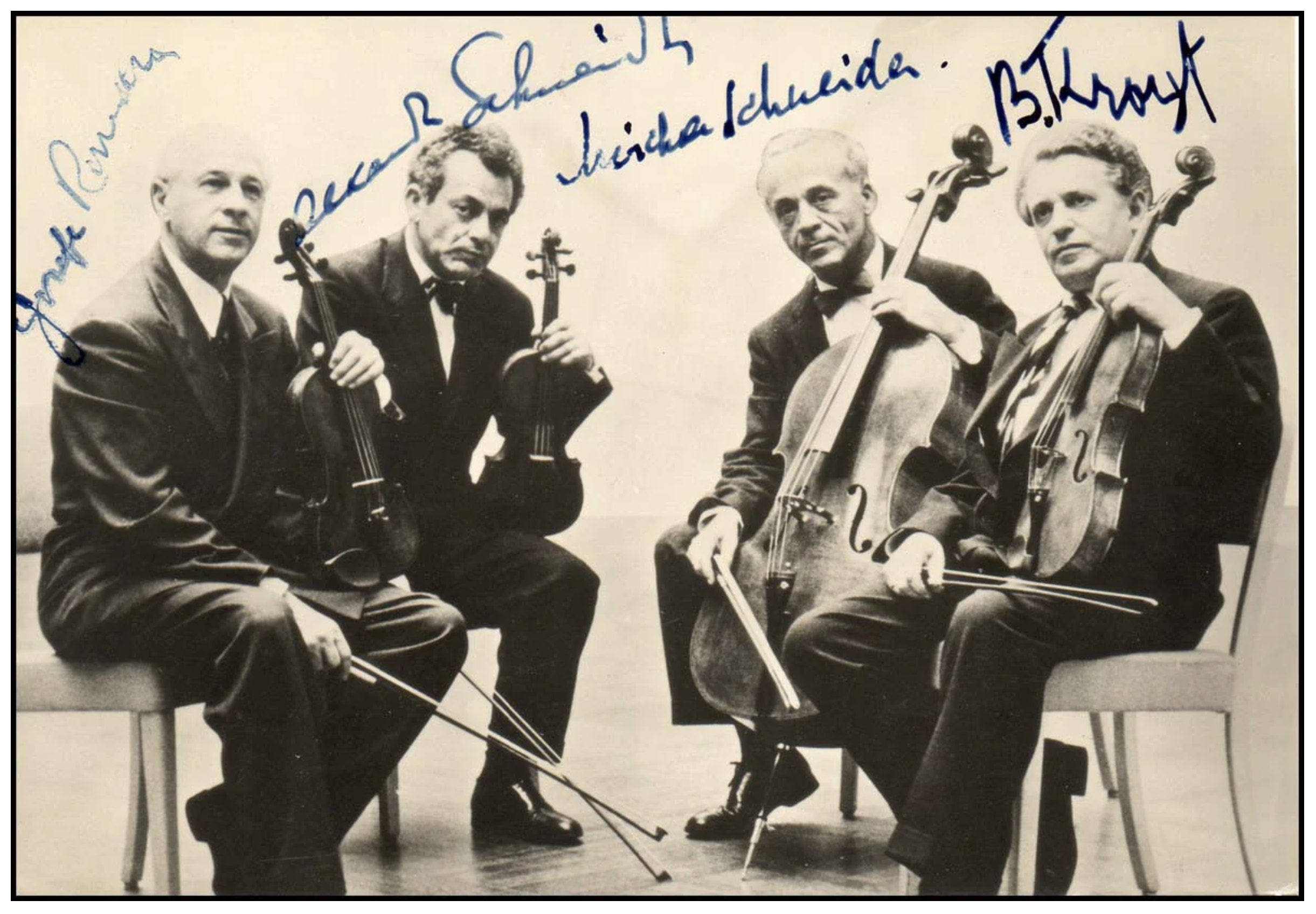
By the mid-1960s, as the Budapest String Quartet was winding down, the Guarneri String Quartet was just beginning, with Arnold Steinhardt as its first violinist. Steinhardt initially played a Pressenda violin and later a 1739 Guarneri ‘del Gesù’. The connection between the two quartets was forged at Marlboro, the Vermont summer chamber music festival and retreat where established artists and younger musicians live and work together in a highly concentrated chamber-music environment. Sasha Schneider had been central to Marlboro since the 1950s; by the early 1960s Mischa Schneider, Joseph Roisman and Boris Kroyt had also come there, bringing the full authority of the Budapest String Quartet into close contact with the young Guarneri Quartet. Steinhardt later recalled Mischa Schneider approaching him after a concert and saying, “Arnold, your wiolin is veek. Maybe I can do zumzing…”
Several weeks later, Schneider introduced Steinhardt to Roisman, and Steinhardt played the Storioni for the first time in Roisman’s living room in Washington, D.C. It was unlike any violin he had played before: “extremely broad, patterned flatly at the top and bottom like a cello,” with unusually large soundholes, a deep brown-gold top and a back of wildly swirling grain. “I played on and on,” he remembered, “bewitched.”
Roisman told Steinhardt that he would sell him the violin one day, “but not just yet. I still enjoy playing quartets for fun with my friends. Give me a little time.”
Joseph Roisman died on October 10, 1974. Two months later, Steinhardt visited his widow, Pola, and took the violin on trial. He brought it to Charles Beare in London, who finally resolved the question of its identity: the instrument had been made by Lorenzo Storioni in Cremona during the 1780s, originally as a small viola, and had later been slightly reduced and converted to a violin. On March 14, 1975, Steinhardt purchased the Storioni.
One mystery remained. According to Jacques Français, the New York dealer, the scroll on the instrument was an authentic work of Giuseppe Guarneri ‘del Gesù’—the one element Möckel had correctly recognized nearly fifty years earlier. In 1980, Français proposed an exchange: he had found a Storioni scroll that matched the instrument remarkably well and offered it in return for the Guarneri head. Steinhardt agreed, giving the violin the scroll it bears today. The fate of the ‘del Gesù’ scroll is unknown. Black-and-white photographs taken before the exchange show a head of plain wood with a distinctive grain figure in the first turn of the volute, leaving open the tantalizing possibility that it might one day be identified among the Guarneri violins that passed through the Français workshop in the early 1980s.
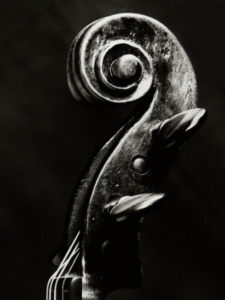
The scroll on the violin in the 1980s, thought to be the work of Guarneri ‘del Gesù’ by Jacques Français. Does anyone know where it is?
With the Storioni in his hands, Steinhardt led the Guarneri Quartet through one of the most influential chamber-music careers of the late 20th century. Emerging from the extraordinary musical environment of Marlboro in the mid-1960s, the quartet carried forward the tradition of the Budapest while creating a voice unmistakably its own: serious, humane, intensely communicative and deeply collaborative. Through decades of concerts, recordings and teaching, the Guarneri helped shape the modern understanding of the string quartet and became a touchstone for younger ensembles, many of whom encountered its members not only on stage but as teachers, coaches and mentors.
Steinhardt played the Storioni for the remainder of the Guarneri Quartet’s career, forming a relationship with it that he later explored in Violin Dreams, Indivisible by Four and his engaging, beautifully written blog, Key of Strawberry. When Arnold decided that the time had come to part with the violin, he called me.
At Tarisio, we take great care to respect the legacy of these remarkable instruments, and we see it as our responsibility to ensure that they move forward in the right hands. It was therefore especially meaningful to help secure a worthy and natural next chapter for this violin with a promising young string quartet, continuing its long association with chamber music into a new generation.
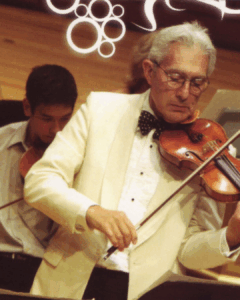
Arnold Steinhardt
At Tarisio, we take great care in handling instruments like this, with of special historical importance and in ensuring that they move forward in the right hands.
Once you know this iconic violin began its life as a viola, everything falls into place, and you cannot unsee it. It is also easy to understand why earlier experts struggled to identify its maker: the oversized soundholes, the bold edgework and the deep, plunging C-bouts all suggest something beyond normal violin proportions.
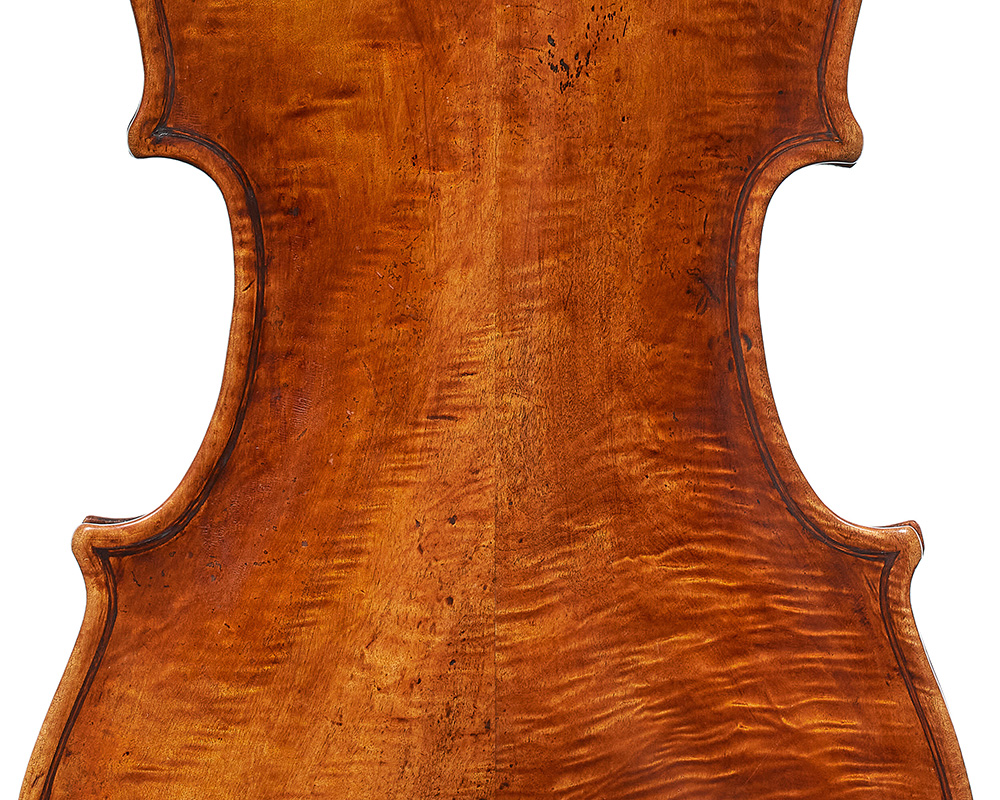
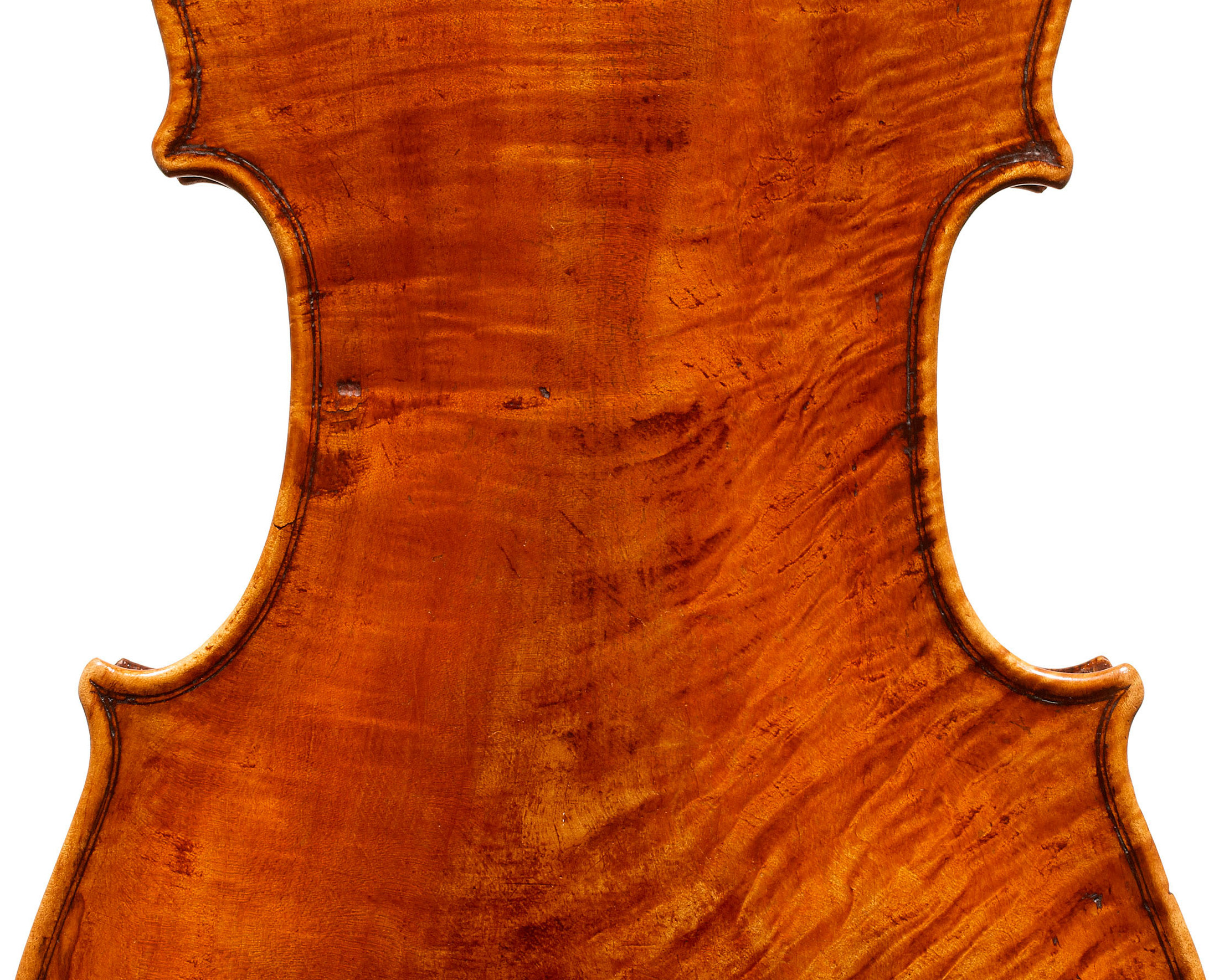
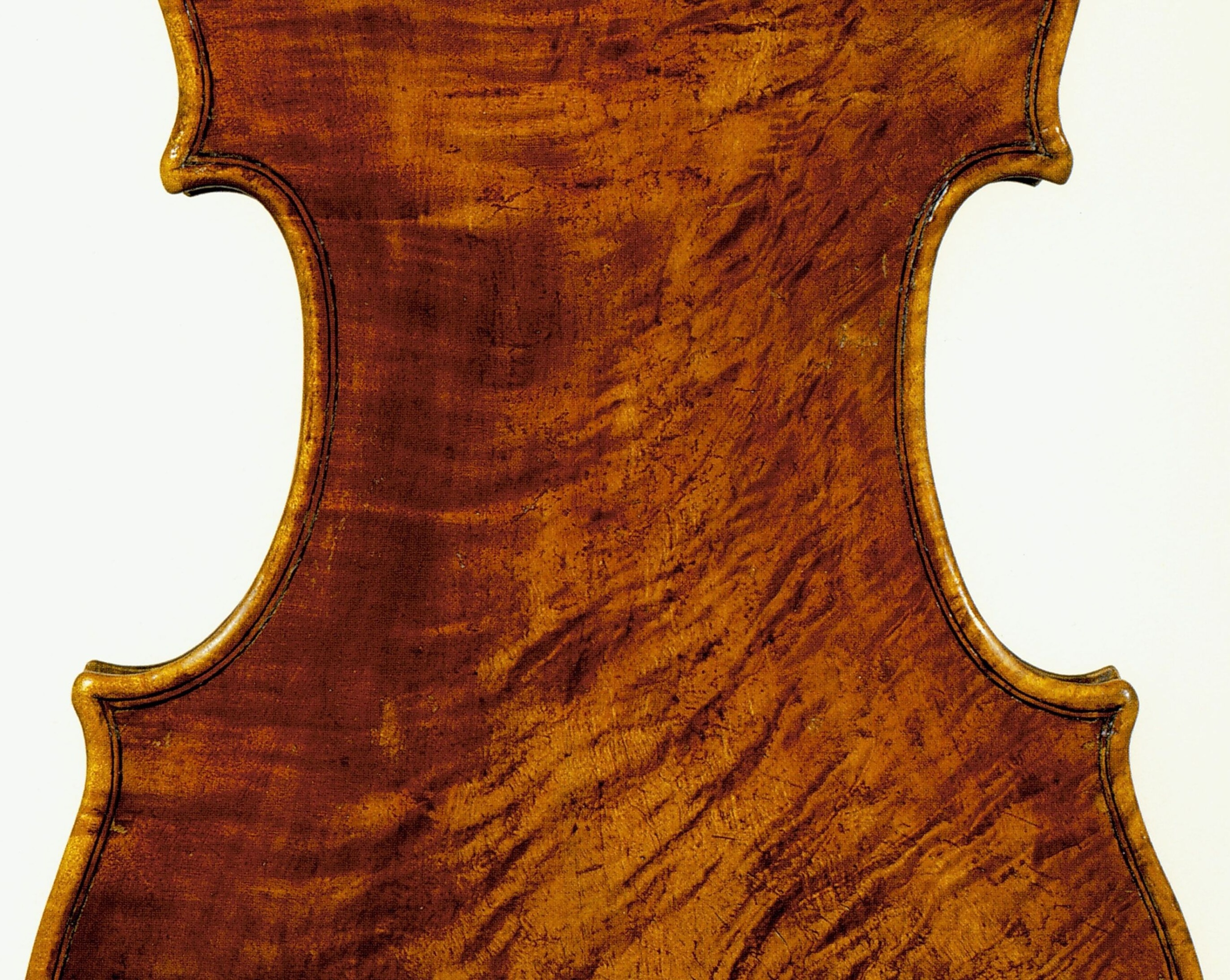
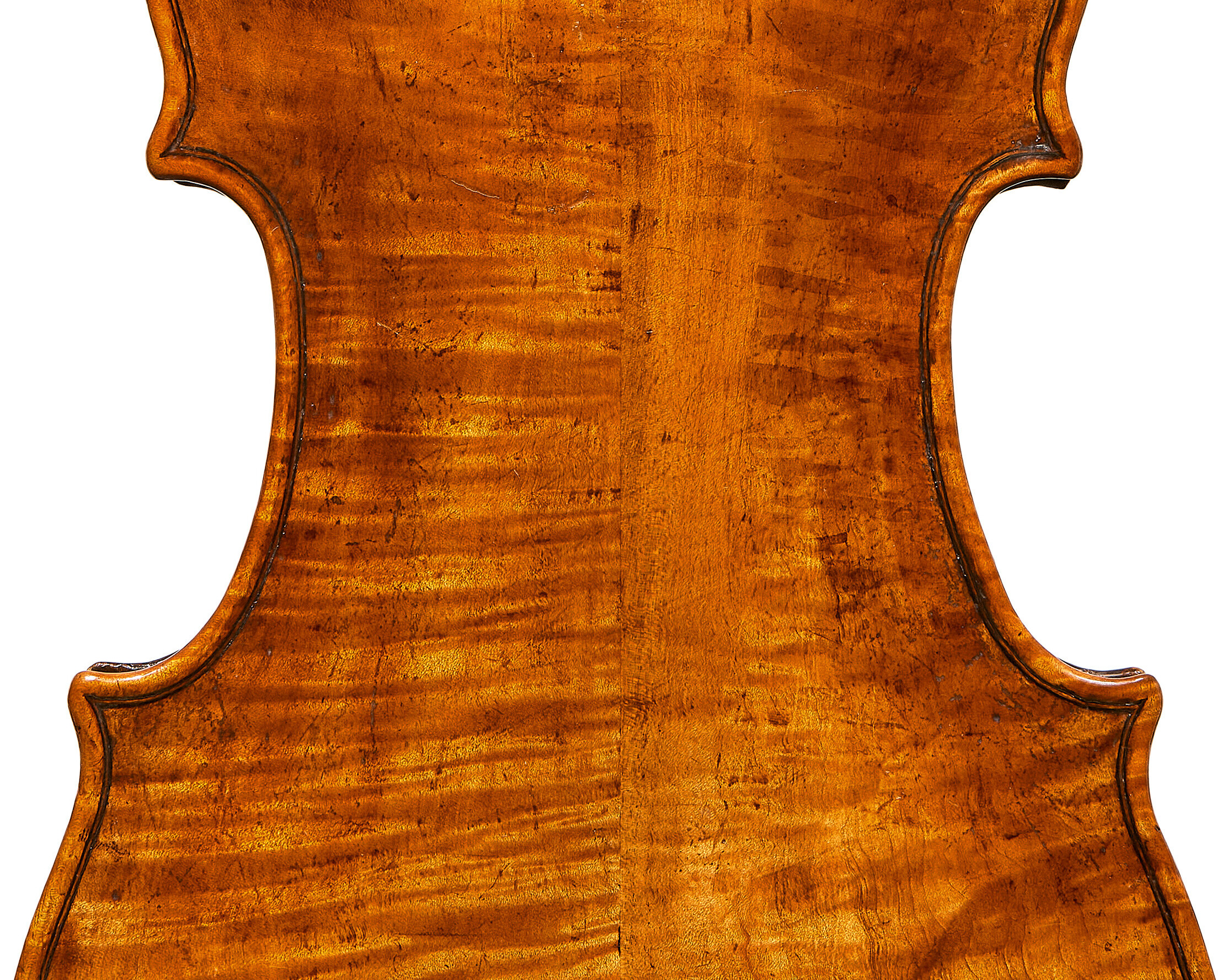
The edges are of normal width for a viola, but appear unusually bold on an instrument of violin proportions. Scraper marks are visible on the flatter areas of the arching, and scribe lines from a marking gauge can still be seen in the back corners.
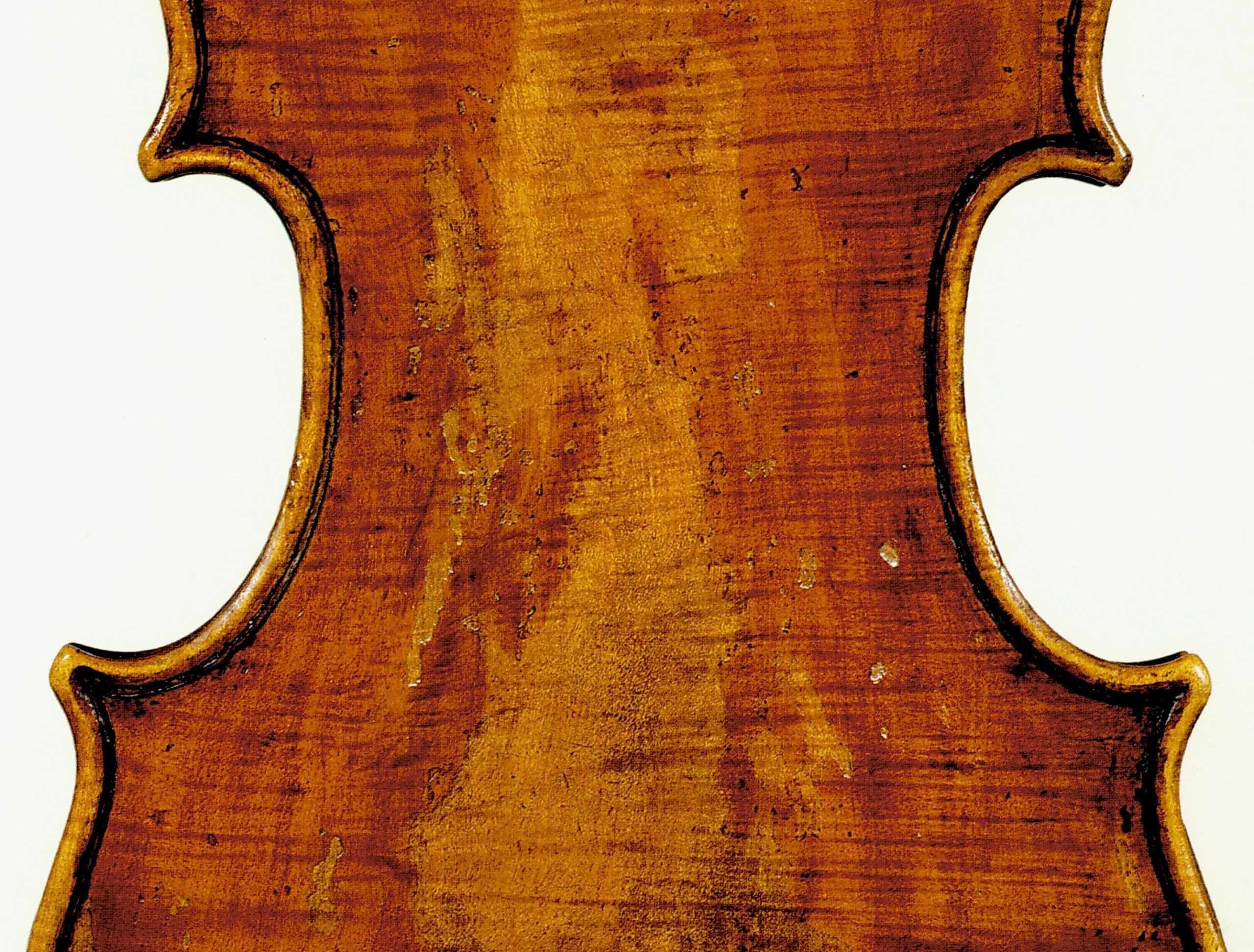
The back is made of two pieces of local oppio, often called field maple. This was a common choice for Storioni, particularly in his violas. The extremely narrow flame appears in bursts shooting diagonally upward from treble to bass, with a strong concentration in the lower bass bout. There is a prominent knot in the upper bouts. The edges are of normal width for a viola, but appear unusually bold on an instrument of violin proportions. Scraper marks are visible on the flatter areas of the arching, and scribe lines from a marking gauge can still be seen in the back corners.
Oppio was a common choice for Storioni, particularly on his violas.
Like many makers in the late 18th century, Storioni made violas in two sizes: a larger model of about 41.0–41.5 cm, and a smaller model of approximately 39.3–39.6 cm. The ‘Steinhardt’ now measures 36.0 cm, suggesting that it was shortened by about 3.5 cm. Some material was also removed from the center of the top and back, giving the instrument more harmonious, violin-like proportions. Its present bout widths are 16.5 cm, 11.8 cm and 21.0 cm. By comparison, Storioni’s smaller violas are approximately 18.1 cm, 12.8 cm and 23.2 cm across the upper, middle and lower bouts. The reduction was therefore not simply a matter of shortening the body; the whole outline was carefully narrowed and rebalanced.
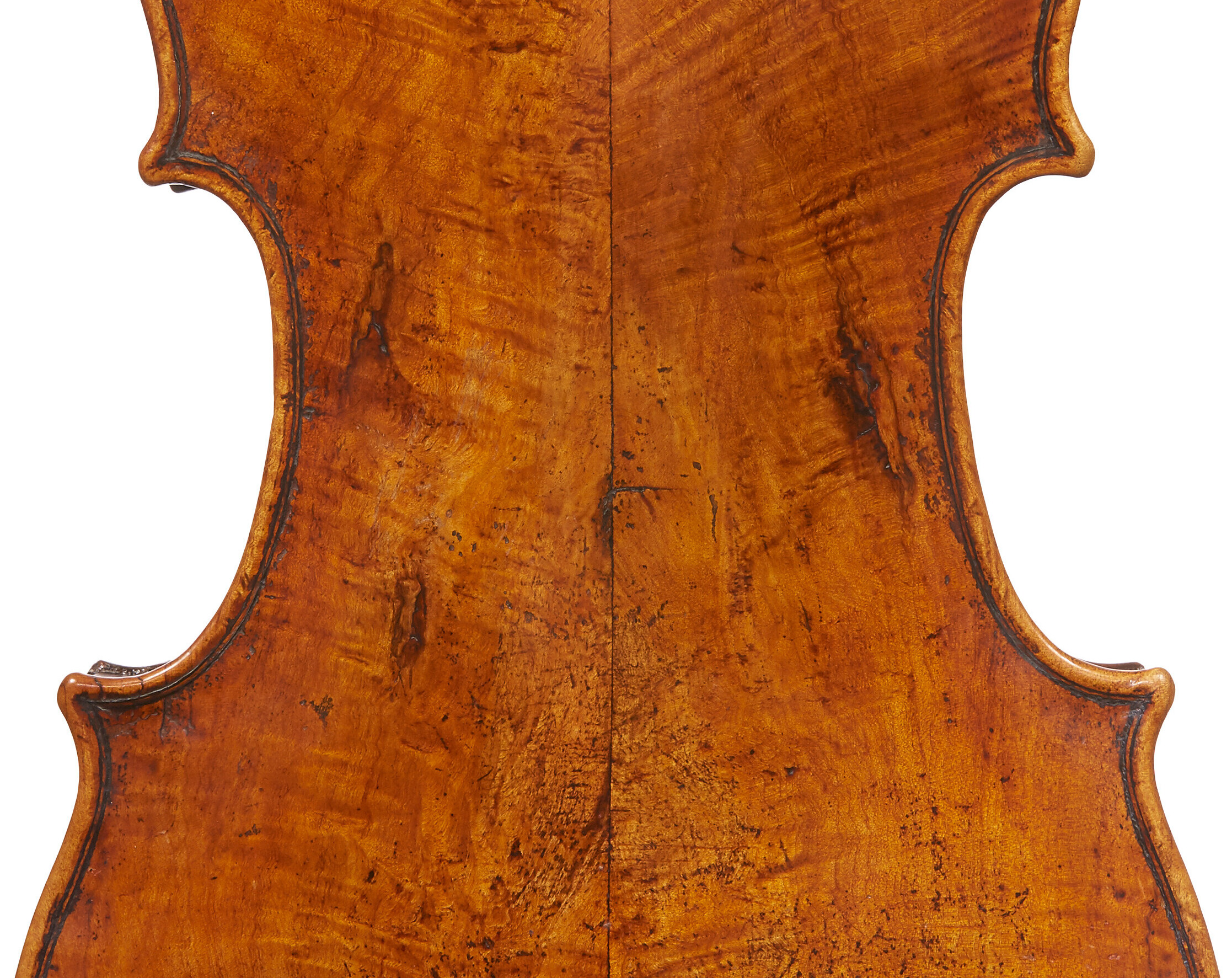
Reduced instruments often reveal themselves through telltale scarf joints above and below the corners. On the top, these usually disappear into the vertical grain, but on the back they are often conspicuous and unsightly.
On this instrument, however, the resizing was done with remarkable care and made to be nearly invisible. First, the purfling was removed from the upper and lower bouts and preserved. The viola’s edge was then separated by cutting down through the purfling channel with a narrow-kerfed saw, taking great care to keep the edge connected to the C-bouts at the corners. With the edges pulled back, the plates were reduced and the new outline was refined. Then the purfling and edge were reattached in a way that makes the violin appear uncut. A new button was grafted, and the locating pins were replaced on the center joint. If you look closely, however, you can see that the flame no longer lines up across the purfling. By the time the original edge has wrapped around to the center joint, the angle and orientation of the figure are noticeably different from the wood inside the purfling.
The ribs are made of similar oppio, though slightly plainer. The spruce top is of wide grain, with a prominent hazelfichten figure. The soundholes are very beautiful, though not especially precise in their cutting. The wings flare slightly into a hatchet shape, reinforcing the visual kinship with late Guarneri.
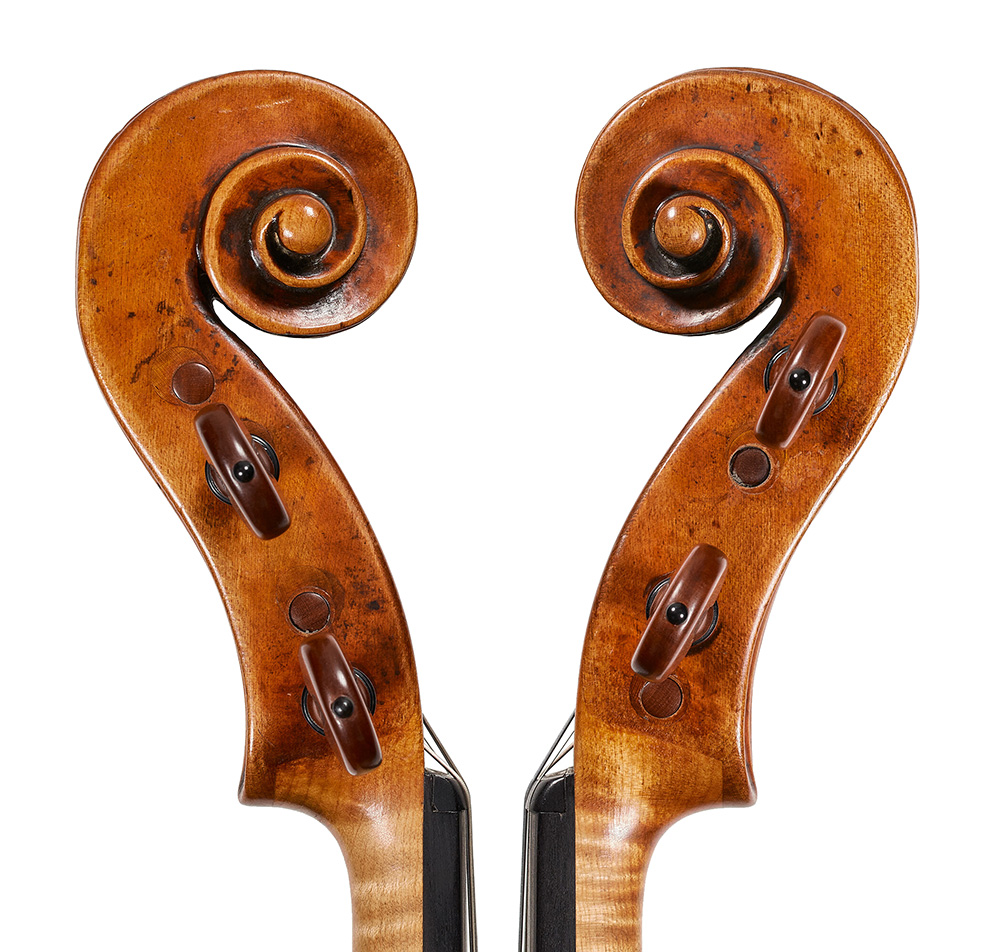
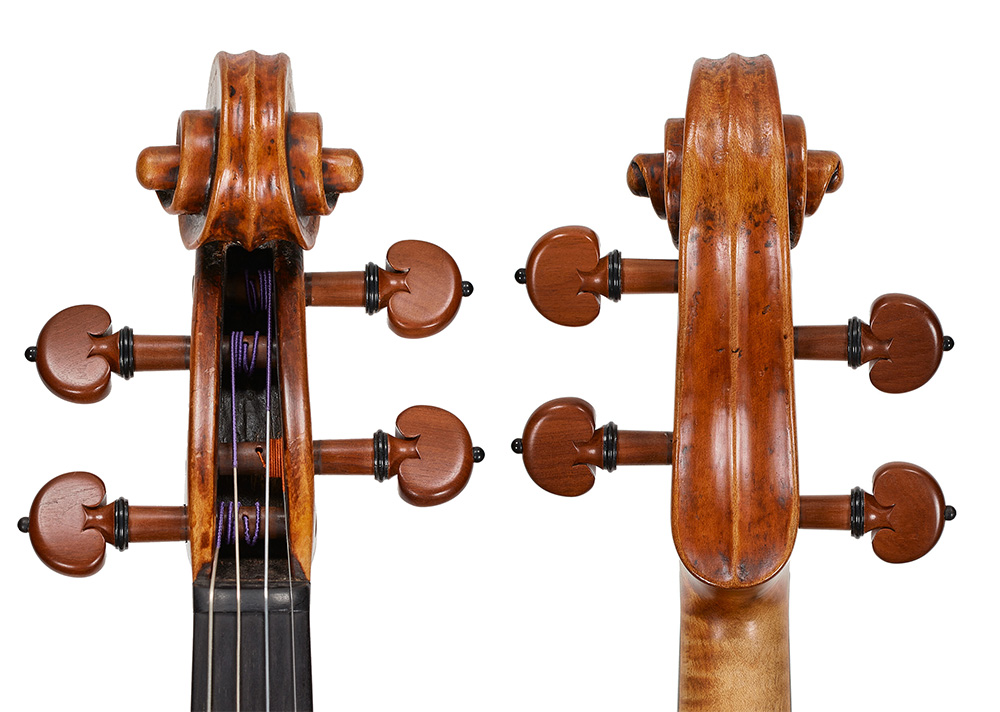
The head that Français fitted in 1980 is also the work of Storioni, made for a violin, and it suits the instrument exceptionally well. The volute is finely carved, with the last turn cut high up the back of the eye. The walls of the final turn trim quickly, so that, from behind, the center of the volute seems to project outward.
The volute is finely carved, with the last turn cut high up the back of the eye.
One characteristic feature of Storioni’s heads is the unusually close grouping of the pegs. All makers bring the upper and lower pegs into some relationship with one another, but Storioni’s arrangement is notably compact. This feature is most often associated with Neapolitan makers, whose experience with mandolins required them to fit eight working pegs into a small head. Storioni was one of the few makers outside Naples to adopt a similarly clustered configuration.
The varnish is a beautiful golden orange-brown, with a pleasing texture and a strong impression of depth. It is very well matched between the body and scroll.
The violin stands on its own as a superb example of Storioni’s work, even before considering its nearly century-long life at the heart of chamber music. It is also only one chapter in a larger story of Tarisio’s association with the instruments of the Guarneri Quartet. In the coming weeks, we will revisit two other remarkable instruments from that quartet sold by Tarisio: the ‘ex-David Soyer’ Andrea Guarneri cello and the ‘ex-Michael Tree’ Domenico Busan viola.