Adolphe Brodsky did what no other violinist would: in 1881 he took the Tchaikovsky Violin Concerto onto the stage for the first time. The 1751 Guadagnini that bears his name is now presented for sale by Tarisio Private Sales for the first time in nearly fifty years.
Brodsky’s choice places him within a distinguished tradition. Among the great Italian makers, Guadagnini has for two centuries been a name violinists have turned to when seeking an instrument with immediacy, projection, and the ability to carry to the back of a hall. The roster of players who chose his violins reads almost like a history of violin playing itself: Eugène Ysaÿe, Joseph Joachim, Arthur Grumiaux, and Henri Vieuxtemps all played Guadagninis.
The ‘Brodsky’ was made by Giovanni Battista Guadagnini at the beginning of his Milan period, one of the most vigorous and transformative phases of his career. Having left Piacenza, the city where his career began, Guadagnini entered a more competitive and cosmopolitan environment in Milan, and his work from these years reflects a shift toward bolder aesthetics, broader arching, a brilliant reddish varnish and a more assertive tonal concept. The instruments he made in Milan are among the most refined of Guadagnini’s output and they possess a directness and power that appeals greatly to players. This is precisely the sort of instrument one could imagine in the hands of a violinist willing to champion a controversial new concerto.
This is precisely the sort of instrument one could imagine in the hands of a violinist willing to champion a controversial new concerto.

Adolph Brodsky
Adolph Brodsky was born in 1851 in Taganrog, in the Russian Empire, into a musical family: both his father and grandfather were violinists, and he began playing at the age of five. His talent was evident early, and at nine he was sent to Vienna, where he entered the Conservatory as a pupil of Joseph Hellmesberger, one of the leading violin pedagogues of the period. Brodsky’s musical formation was therefore rooted firmly in the Central European tradition, combining technical discipline with a serious and essentially classical approach to interpretation.
His progress was rapid. While still a young man he joined the Vienna Court Orchestra, serving there from 1866 to 1868, and subsequently embarked on several years of concert touring. In 1873 he settled in Moscow, where he soon joined the faculty of the Moscow Conservatory as professor of violin. By this point Brodsky had established himself not only as a soloist but also as an orchestral and chamber musician of considerable standing. His career would ultimately take him through nearly every important sphere of European musical life: Vienna, Moscow, Leipzig and Manchester, as well as a period in New York.
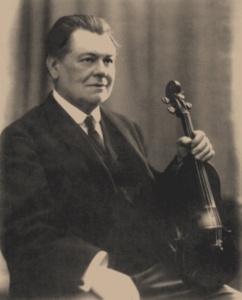
Adolphe Brodsky in the 1890s.
The Tchaikovsky Concerto
The Tchaikovsky Violin Concerto, composed in 1878, is today one of the central pillars of the violin repertoire. Its melodic richness and emotional immediacy make it indispensable. But at the time of its creation, it was anything but universally admired.
At the time of its creation, it was anything but universally admired.
The concerto was initially intended for Leopold Auer, the preeminent violinist of the Russian school, but Auer declined to perform it, reportedly finding it impractical or insufficiently idiomatic. Whether this judgment reflected genuine technical concerns or a conservative aesthetic is still debated, but the effect was immediate: the concerto lost its intended champion.
Recognizing the work’s value, Brodsky undertook to perform it, despite the risks. The premiere took place on December 4, 1881, in Vienna, with Hans Richter conducting. The reception was notoriously hostile. The critic Eduard Hanslick dismissed the concerto with withering language, famously deriding it as “music that stinks to the ear.”
The critic Eduard Hanslick dismissed the concerto with withering language, famously deriding it as “music that stinks to the ear.”
Yet Brodsky persisted. He continued to perform the concerto, and Tchaikovsky, deeply grateful, rededicated the work to him. Over time, the concerto’s fortunes reversed completely. What was once derided became one of the most beloved and frequently performed violin concertos in the entire violin repertoire.
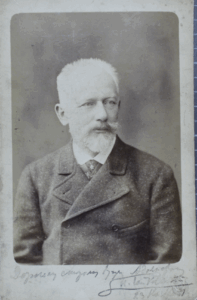
A cabinet photo of Tchaikovsky inscribed to Brodsky.
Giovanni Battista Guadagnini, Milan, 1751
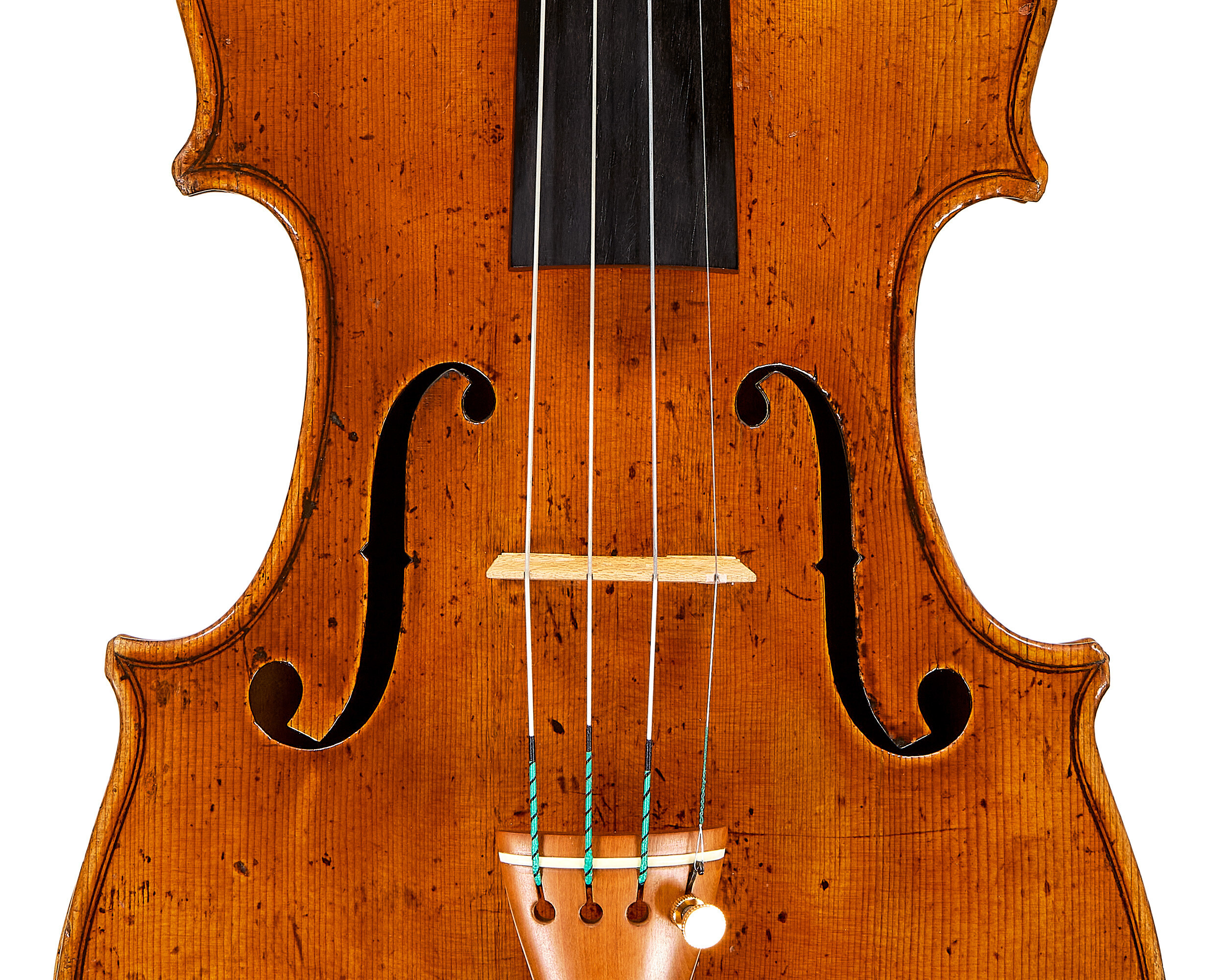
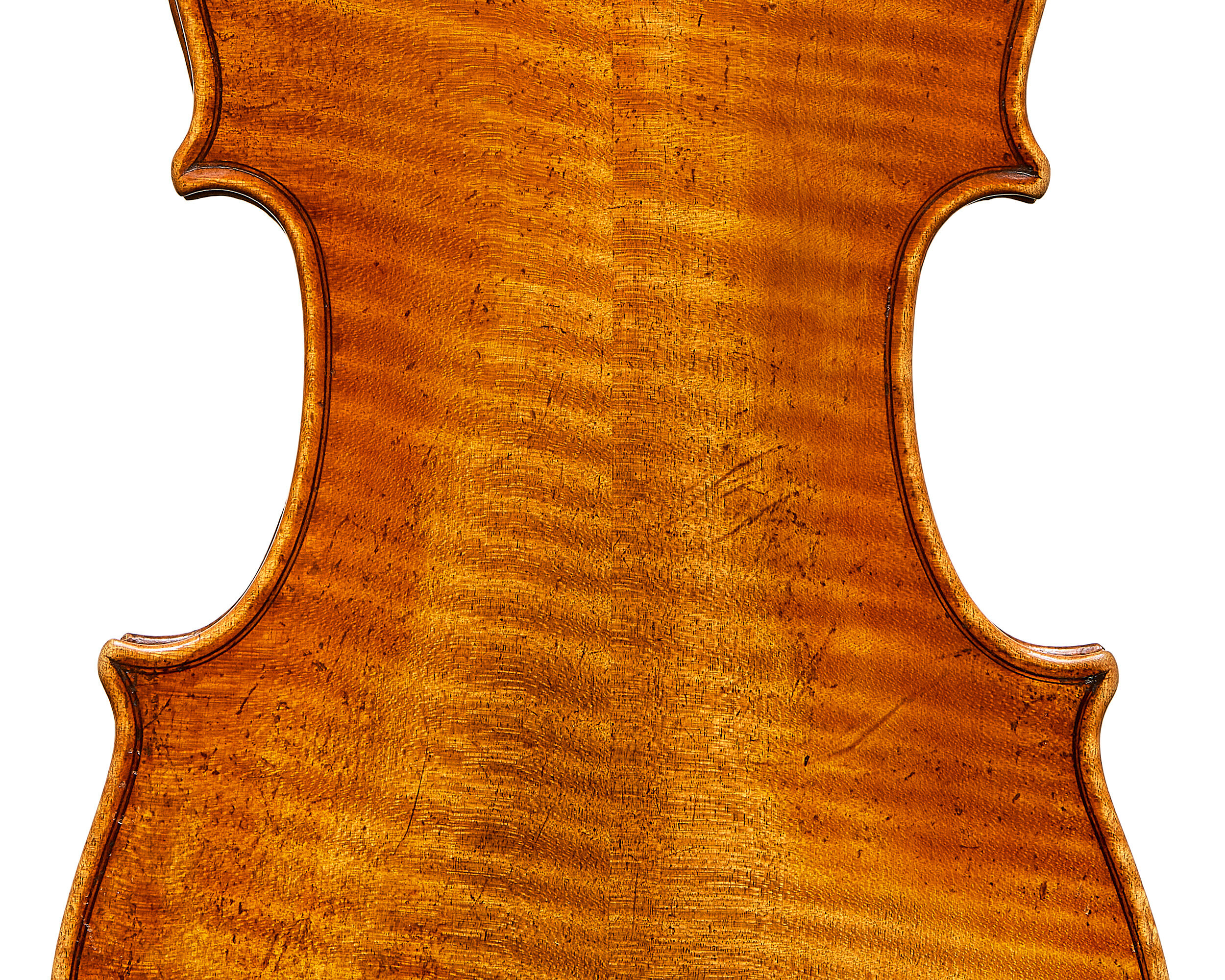
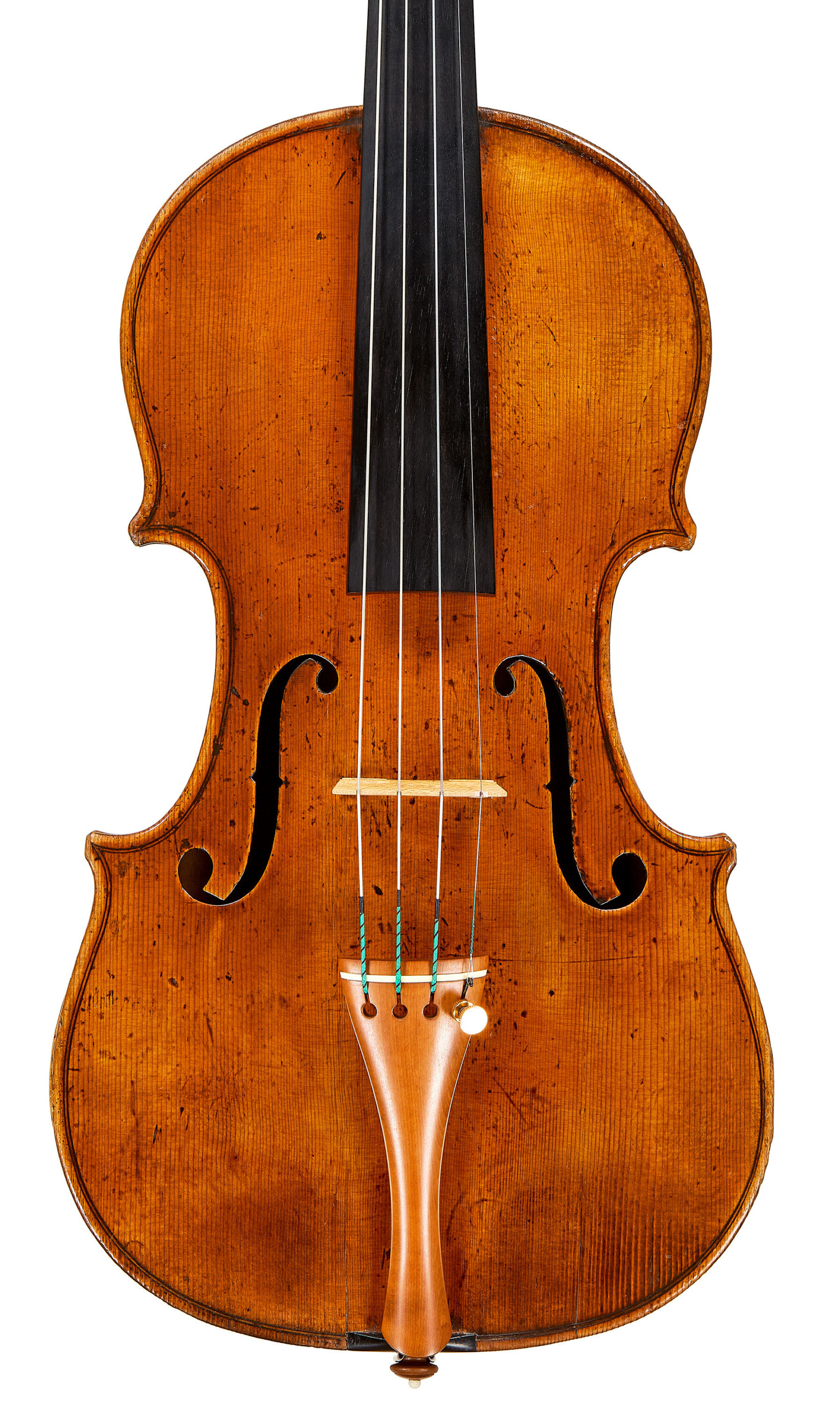
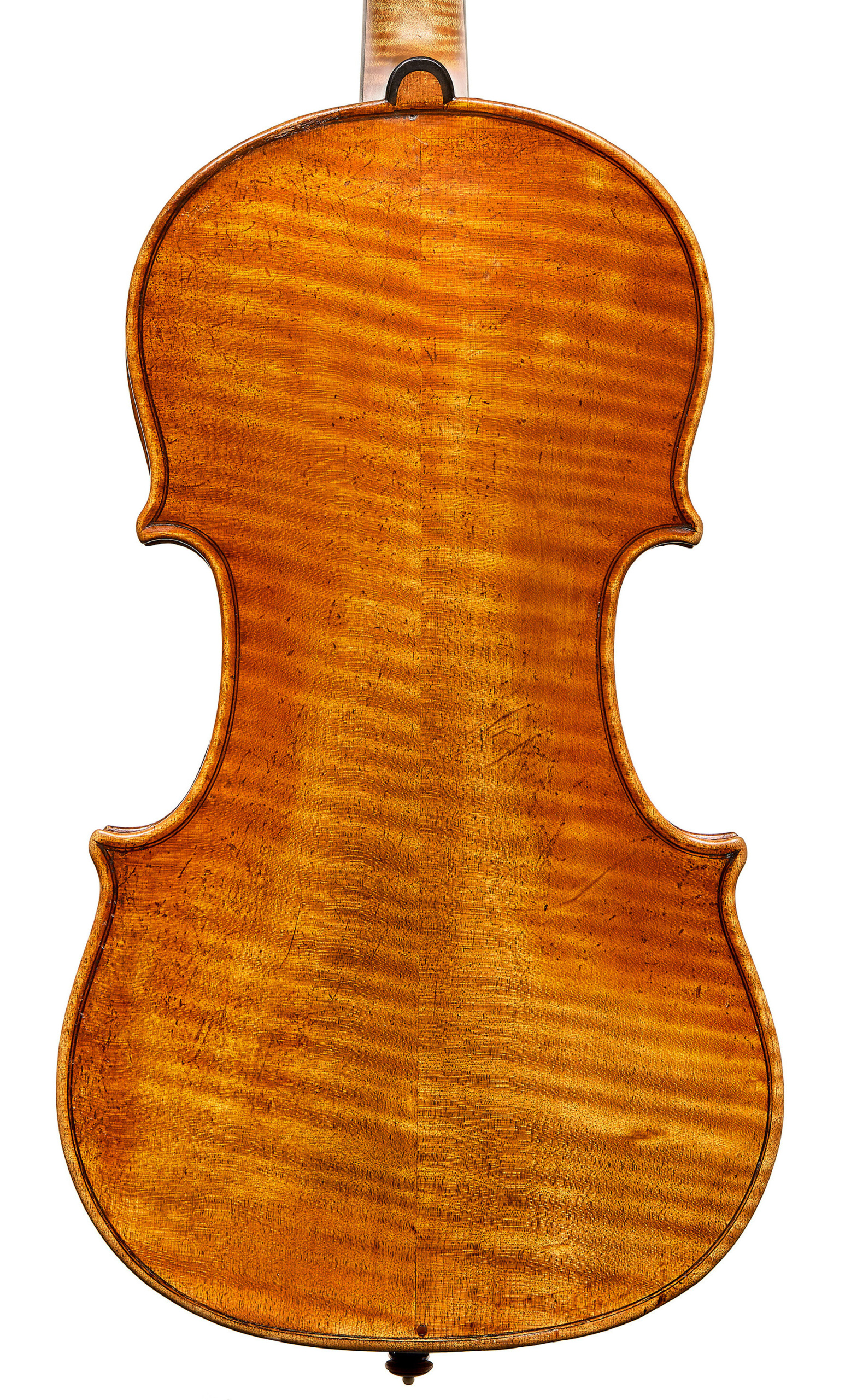
The 1751 ‘Brodsky’ is highly characteristic of the maker’s early Milanese production. The back measures 35.3 cm, but the model is given breadth and presence by a broad, low arch. It is formed from two matched pieces of maple in which the flame continues across the center joint rather than being conventionally bookmatched. This was common in the late 16th and early 17th centuries, namely the work of the Amati family but largely out of fashion from the mid 17th century onwards (I count six total backs by Stradivari with this configuration, five by Storioni, none from Bergonzi but fourteen for Guadagnini).
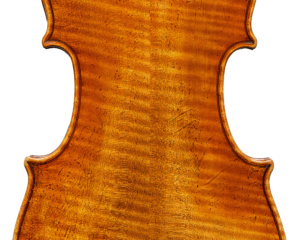
The purfling is relatively fine, narrower than is often encountered in Guadagnini’s work, but made from the characteristic acacia wood associated with the maker. The corner bolsters are clean and well formed, converging toward the center of the corners with little or no pronounced beesting.
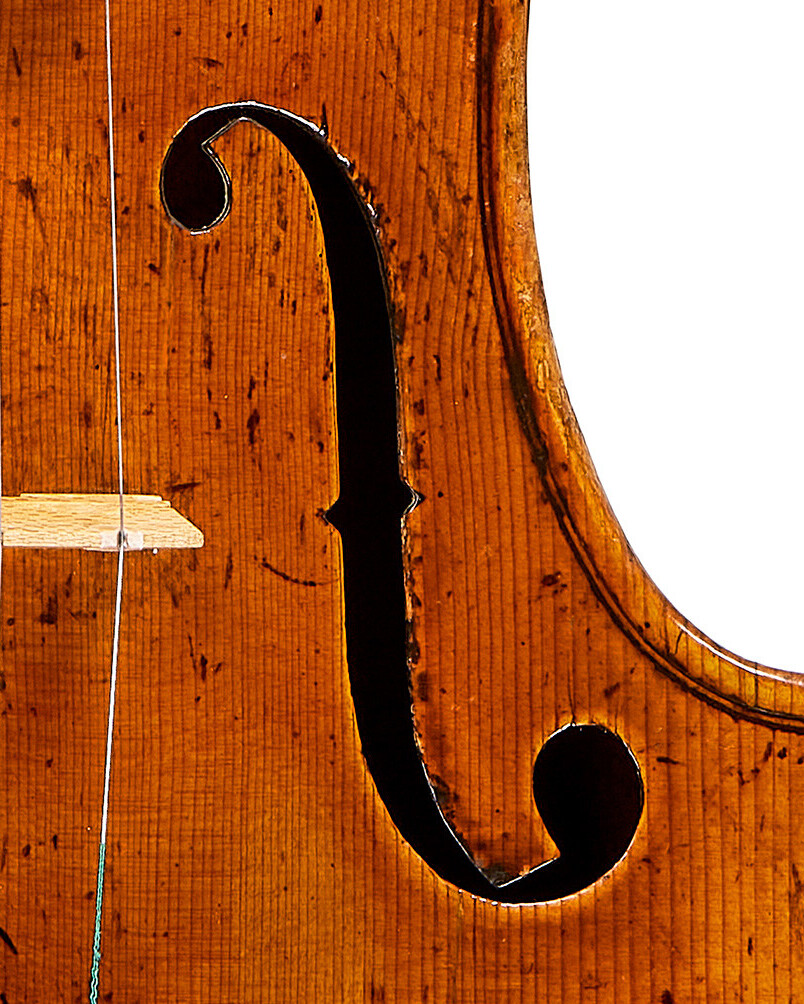
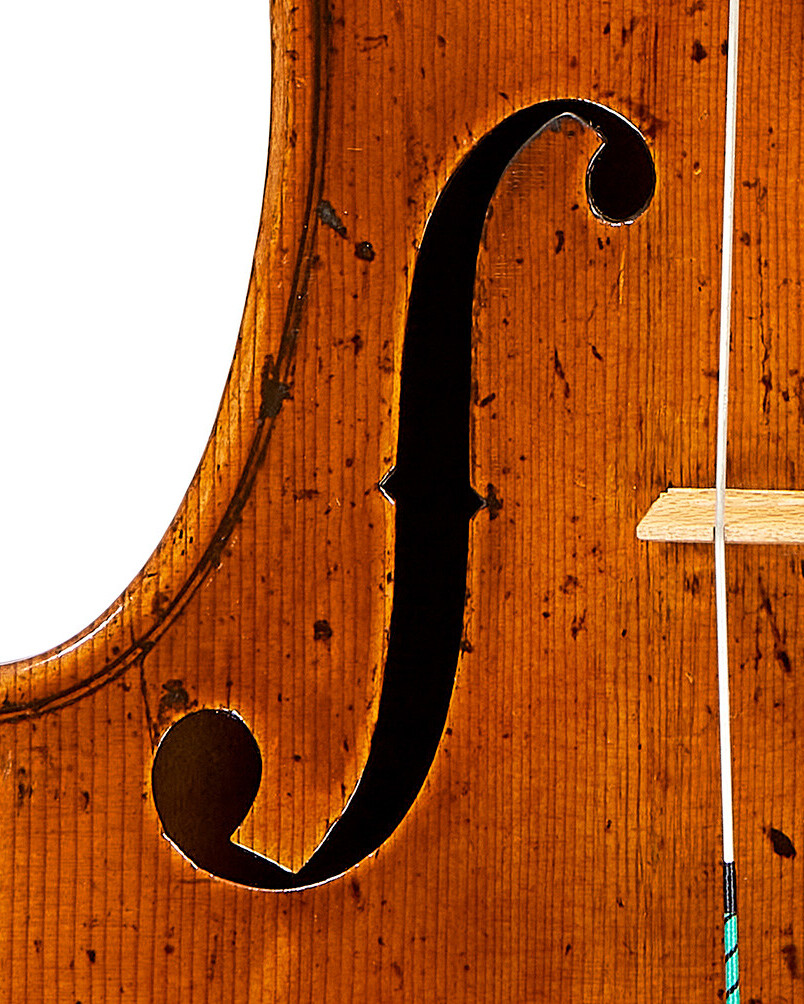
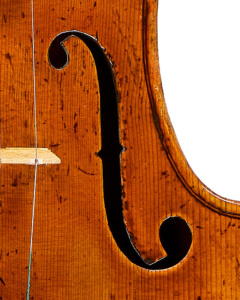
The soundholes are particularly characteristic of the early Milan years. Both the upper and lower lobes have the distinctive almond-shaped form that becomes prominent at this stage of Guadagnini’s career, before largely disappearing from his later work. The notches are cut as strong, triangular forms and are positioned at a correct stop length.
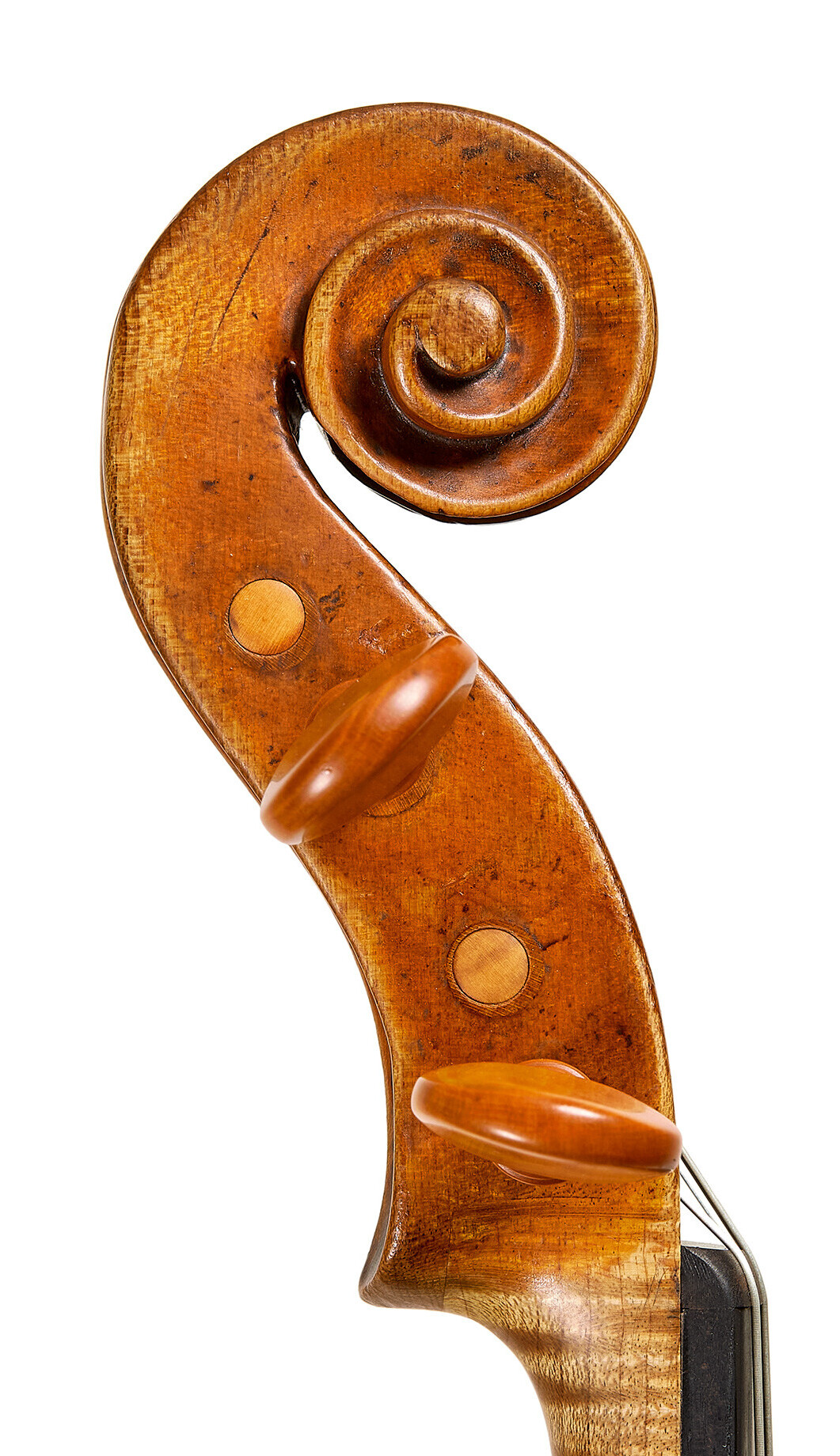
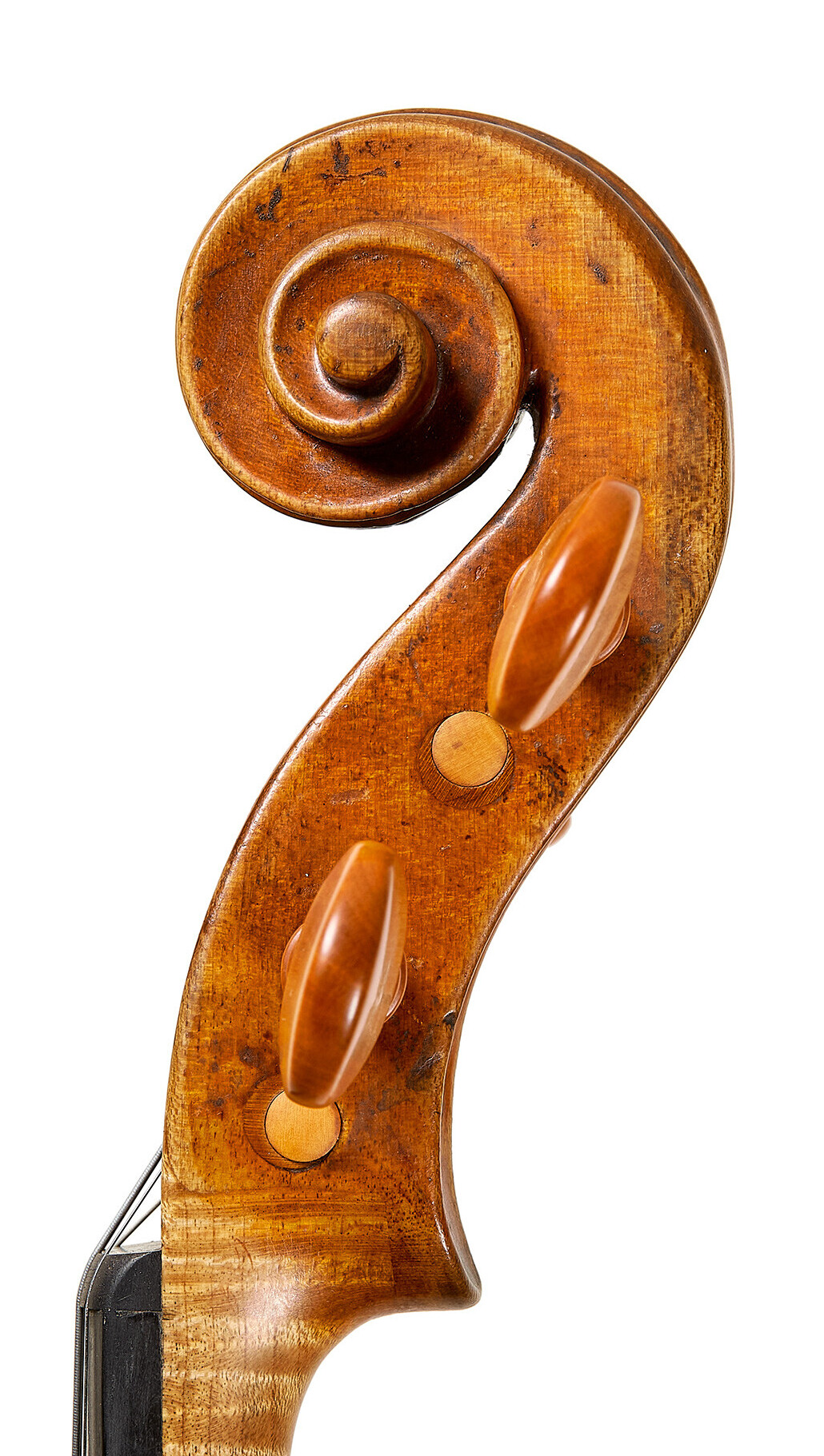
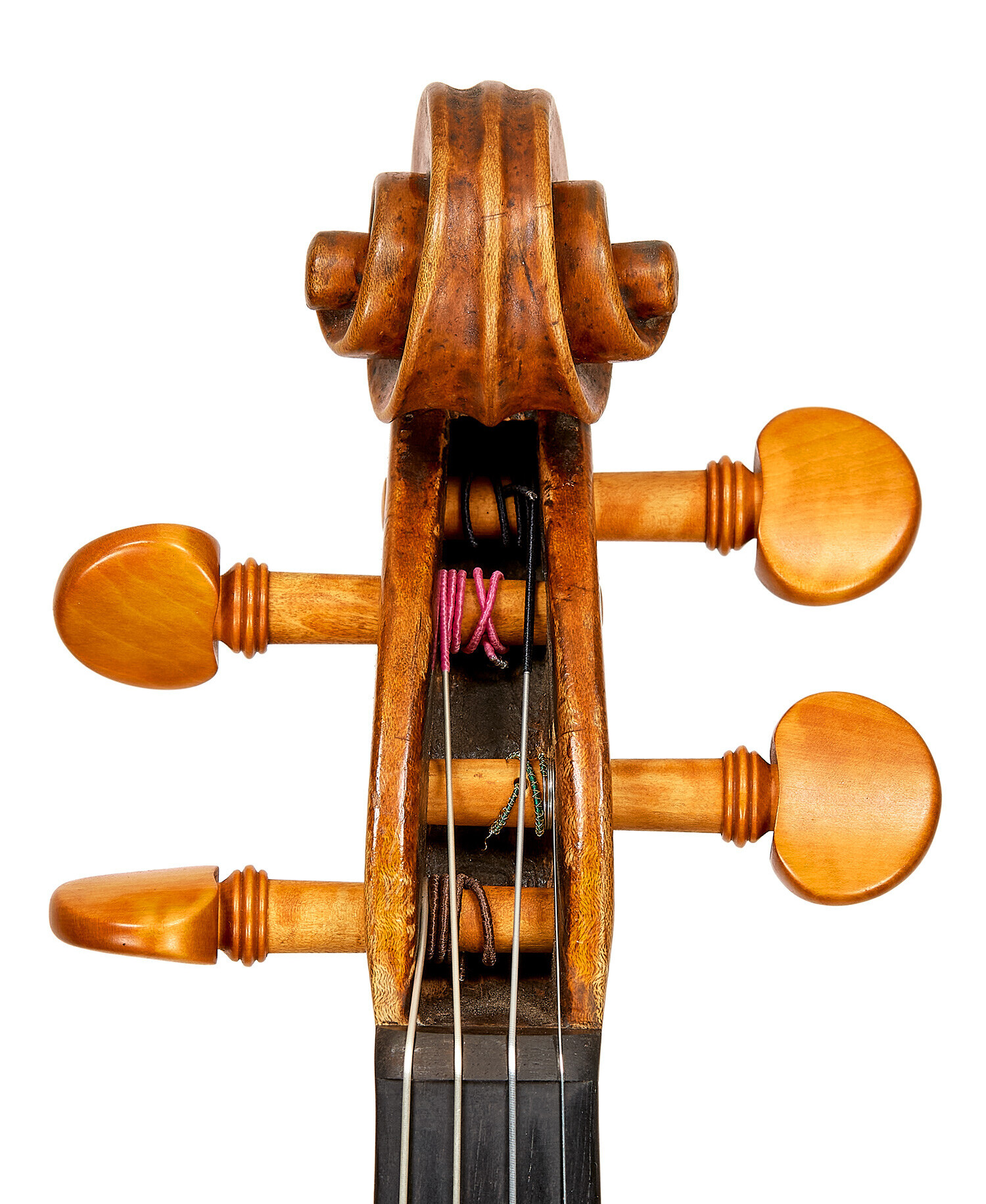
The head provides especially revealing evidence of Guadagnini’s working method. Tracing points remain visible around the scroll, left from the process by which he transferred its layout from a template onto the block of wood. These points subsequently filled with varnish and darkened. Their survival is telling: Guadagnini appears to have made little attempt to disguise or remove them, something that would have been virtually unthinkable in the more exacting finish of classical Cremonese workmanship.
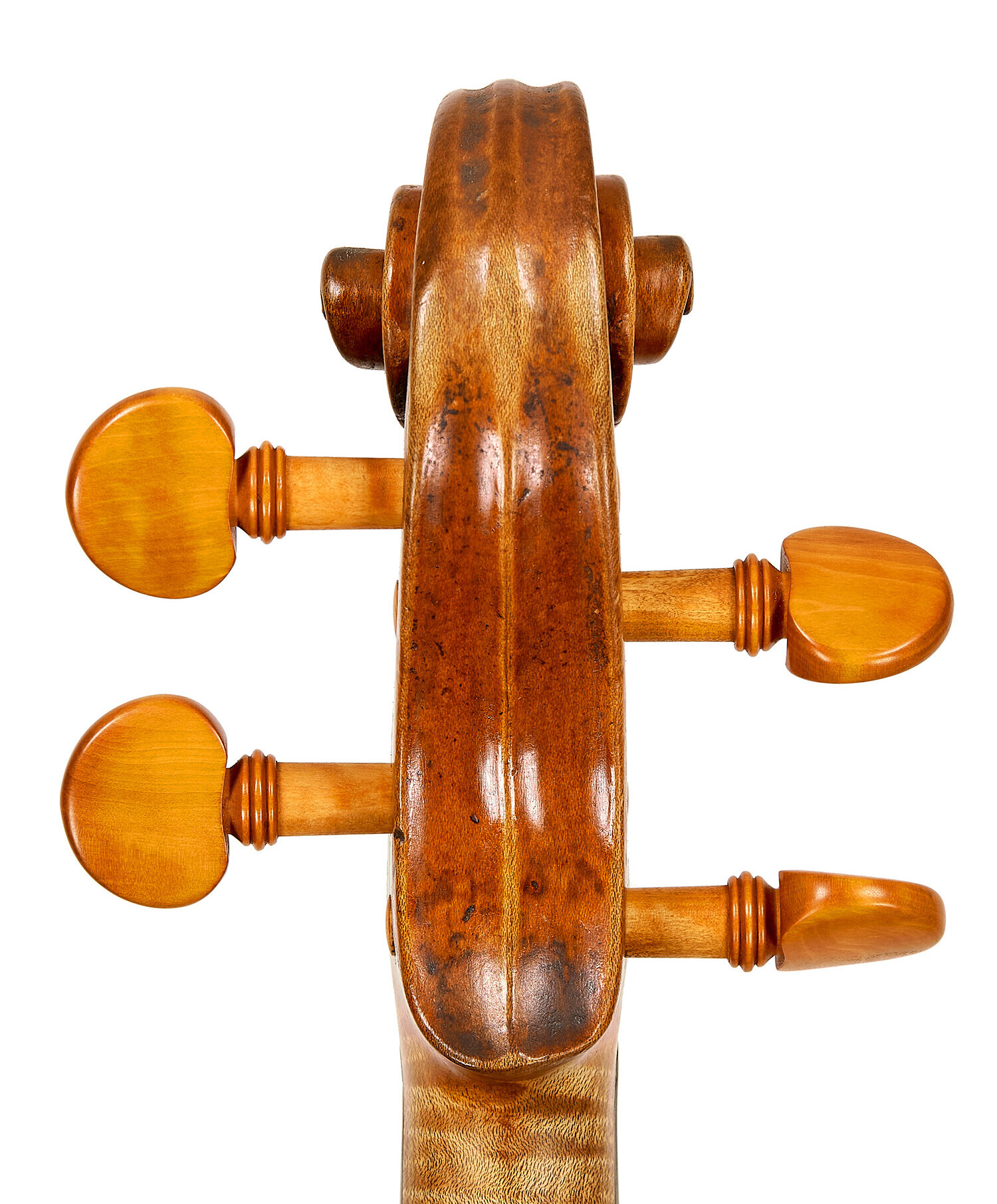
The back of the head gives a similar impression of an efficient and highly practical working style. The back of the scroll is finished largely by eye – the lower end is ovaloid rather than a resolved circle. The fluting was evidently carried out before the chamfer, leaving the central ridge slightly proud of the edges to either side. These details give the head a somewhat improvisational quality: the work of a craftsman moving quickly, with complete confidence in the sequence of operations and little interest in refinement for its own sake.
The varnish is a beautiful orange-reddish brown, entirely characteristic of Guadagnini’s early Milanese instruments. Together, the broad low arching, fine purfling, almond-shaped soundholes and revealing tool marks make the violin a particularly clear expression of Guadagnini’s working style at the beginning of his Milan period.
Over the course of his career, Brodsky owned several important instruments, including a 1702 Stradivari, the c. 1736 ‘Lafont’ Guarneri del Gesù, and two Guadagnini violins. It is not presently known which instrument was used for the 1881 premiere of the Violin Concerto, nor is that uncertainty especially consequential. A violinist of Brodsky’s stature lived and worked with a succession of great instruments, and each formed part of his musical life and legacy.
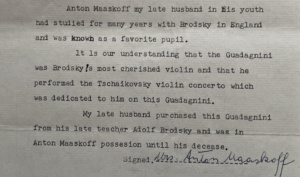
After Brodsky, the Guadagnini passed to his pupil Anton Maaskoff. In 1979, Maaskoff’s widow sold the violin to his present owner, writing that it had been “Brodsky’s most cherished violin” and that he had performed on it the Tchaikovsky Violin Concerto, the work dedicated to him.
The ‘Brodsky’ Guadagnini is currently for sale privately at Tarisio.
It is a privilege to offer the 1751 ‘Brodsky’ Guadagnini through our Private Sales at Tarisio and we look forward to placing it with the steward who will carry its legacy forward.
Inquiries: privatesales@tarisio.com.