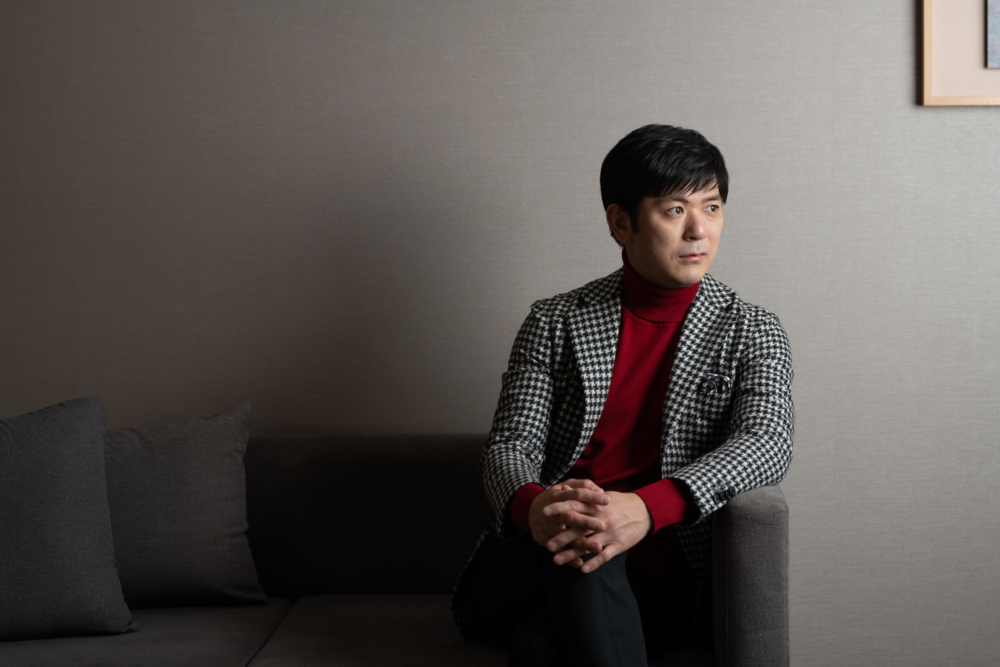
The late-period violins of Giuseppe Guarneri del Gesù have captivated musicians, collectors and connoisseurs for more than two centuries: they are daring, free and they feel more radical than just about anything else in the history of violinmaking. Among the most enchanting of these late Guarneris is the c. 1744 ‘de Bériot’, crafted during the final year of the maker’s life. Today, the ‘de Bériot’ is played by Daishin Kashimoto, First Concertmaster of the Berliner Philharmoniker, having been acquired through Tarisio Private Sales by a discerning patron of the arts.
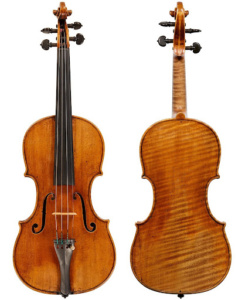
The c. 1744 ‘de Bériot’ Guarneri del Gesù
Extraordinarily beautiful and undeniably unique, Guarneri violins from 1740–1744 are profoundly different from everything that preceded them—and, arguably, from anything that followed. In a remarkably short span, del Gesù departed further from the Cremonese fundamentals he inherited from his father and grandfather—the lineage descending from the Amati workshop—than any maker had done before him. Outlines swell and contract. Soundholes stretch, tilt, and twist. Heads compress, contort and become unexpectedly beautiful. Tool marks are everywhere, symmetry is secondary and the orthodoxy that had defined more than a century of Cremonese work falls away.
Late Guarneri violins don’t look like the culmination of a school—they look like an escape from one.
The top bouts of the 'de Beriot' Guarneri

Twenty-five years ago, the late Robert Bein shared an insight that helped me learn the work of this great maker. Guarneris can sometimes appear to be the work of a madman — provocative, random and seemingly inexplicable — but the reality is quite the opposite. Close examination reveals a coherent logic and a progression of thought: what appears to be a haphazard gesture is actually an idea being tested and refined.
Studying his instruments chronologically reveals that these experiments almost never occur in isolation. Instead, del Gesù worked in clusters, testing concepts in pairs of instruments or groups of threes and fours, where each group acted as an opportunity to refine, alter, or push a specific idea further—whether it was a model, an arching concept, a soundhole type, or a new approach to the scroll.
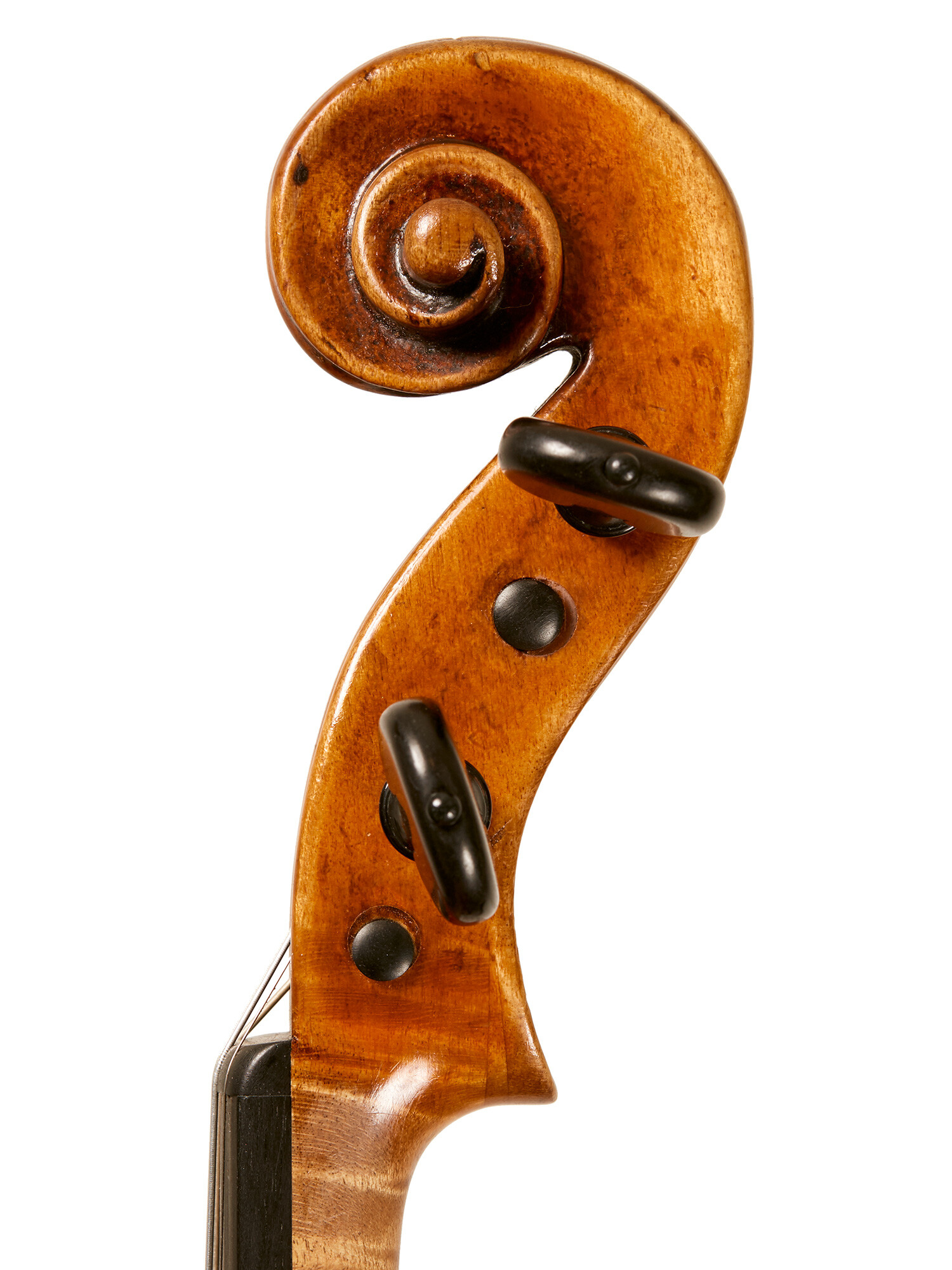
You can track these groupings—the ‘Brusilov’ and the ‘Canary Bird’; the ‘de Bériot’ and the ‘Ole Bull’; the scrolls of the ‘Doyen’, the ‘Leduc’, and the ‘de Bériot’. The flourishes seem singular but in actuality they are experiments along a path of evolution and refinement.
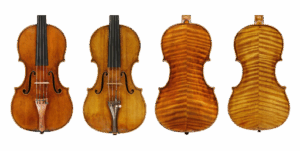
The ‘Brusilov’ and ‘Canary Bird’ Guarneri del Gesù
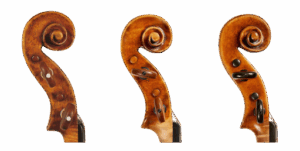
The ‘Ole Bull’, ‘Leduc’, & ‘de Bériot’ Guarneri del Gesù
This “wildness” of the late instruments is often explained through theories of illness, haste, madness or “other hands” in the workshop. Some of that remains unresolved. But instruments like the ‘de Bériot’ resist any easy story of decline. This isn’t the work of a maker who’d lost control of his materials or his ideas—it’s the work of a maker who’d absorbed the Cremonese tradition so completely he could decide, feature by feature, what he no longer needed, and a maker so free that he could write his own language of making and of sound, unafraid and without apology.
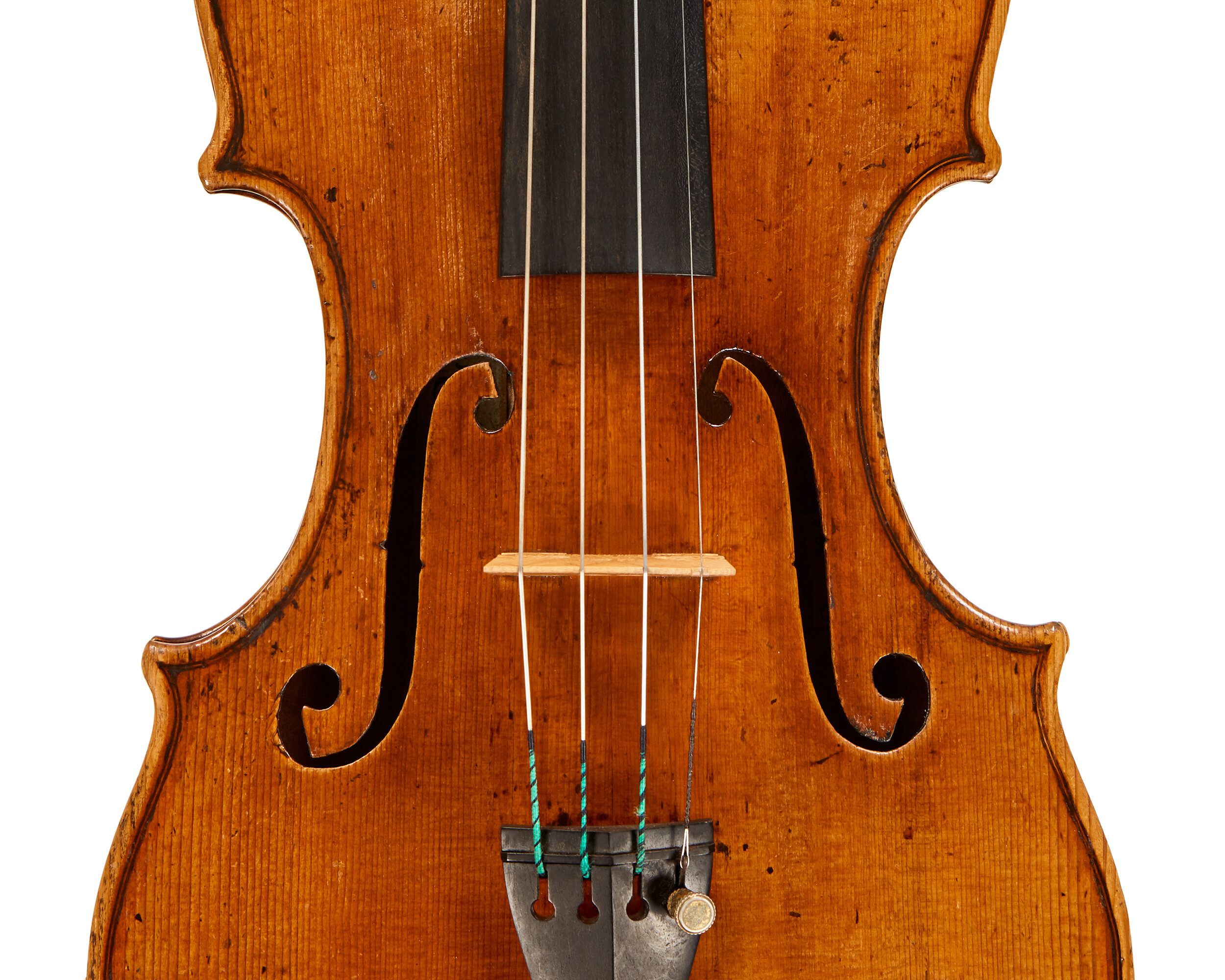
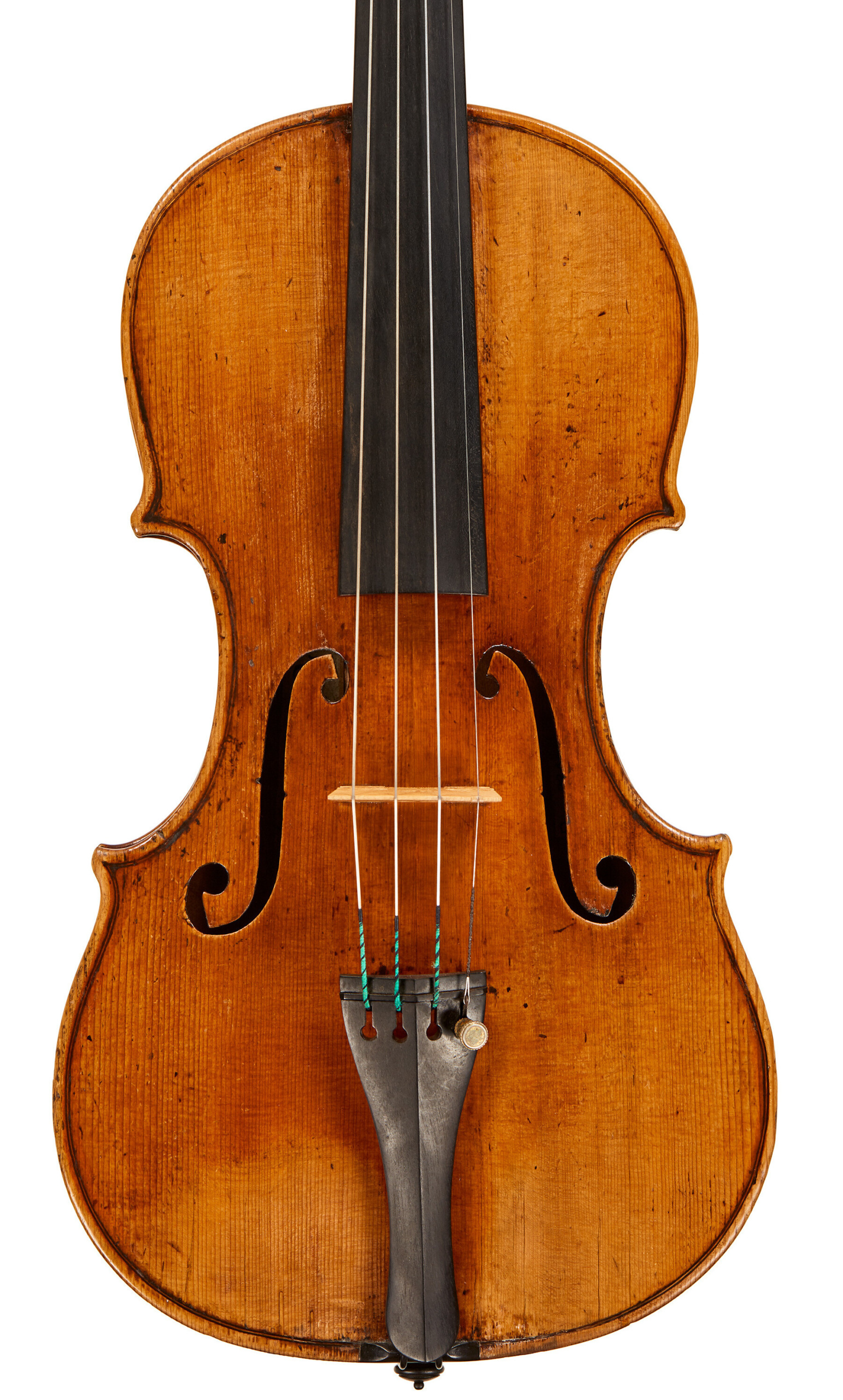
At roughly 35.2 cm, the ‘de Bériot’ isn’t especially large, yet it feels broad. The upper bouts are full and somewhat square, the lower bouts expansive, the C-bouts unusually open and shallow. The outline gives a broad platform for the arching, which is low and almost completely without counter-curve or channeling into the edges.
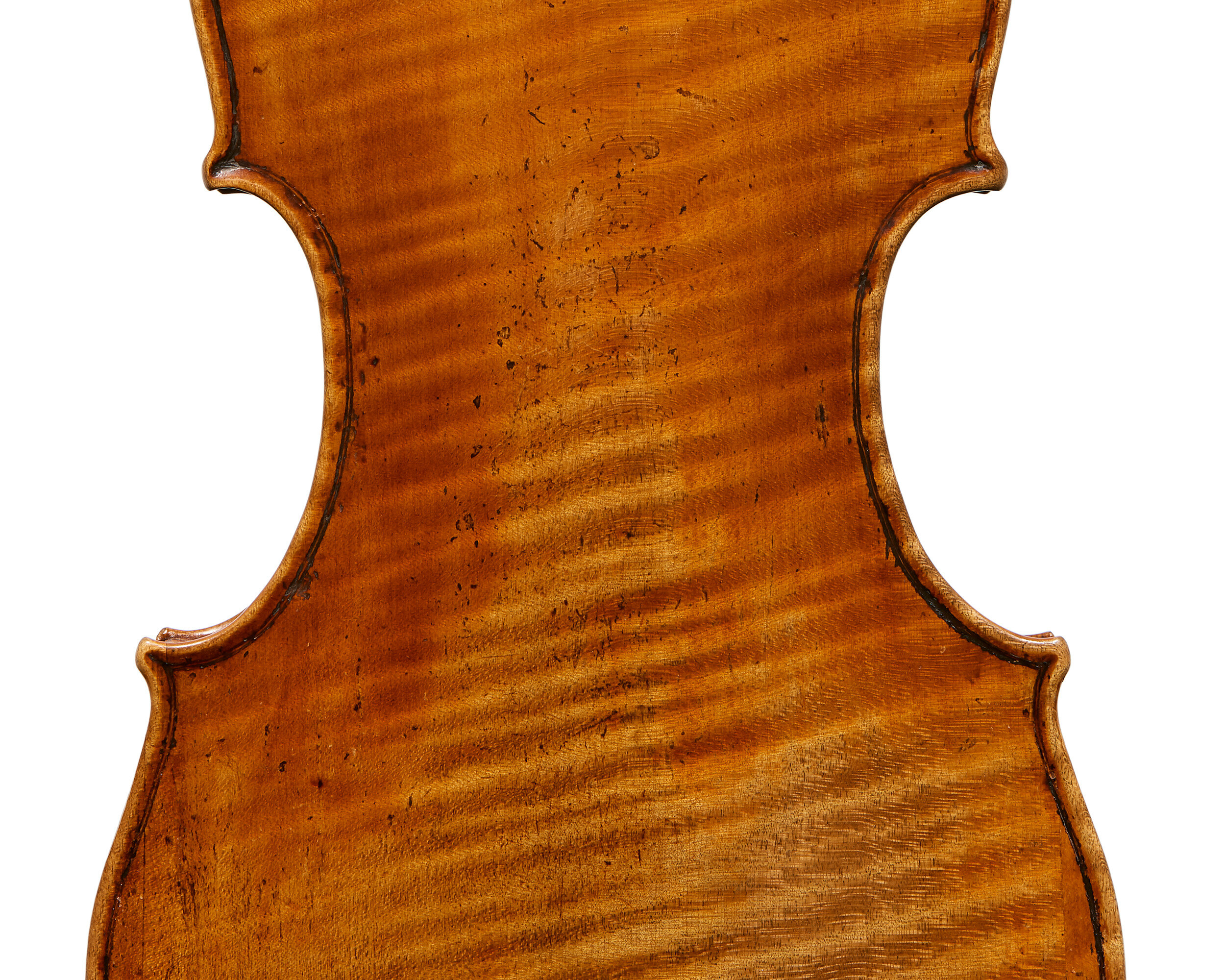
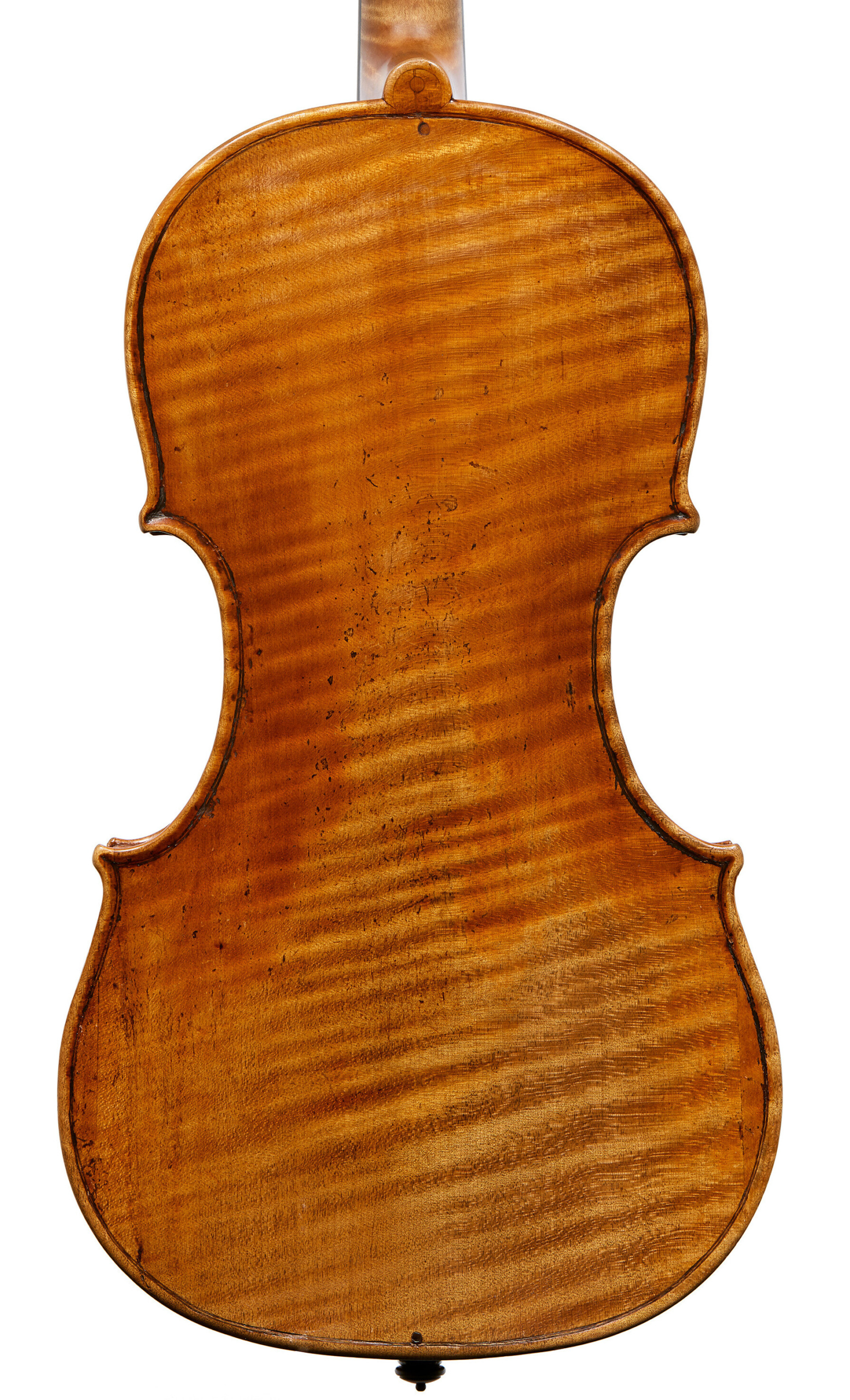
The back is a single piece of maple with medium width flame ascending from treble to bass. Dendrochronology suggests the treble side of the top is a possible same-tree match to the 1744 ‘Ole Bull’ and the bass side is a possible same-tree match to the 1744 Lord Coke.
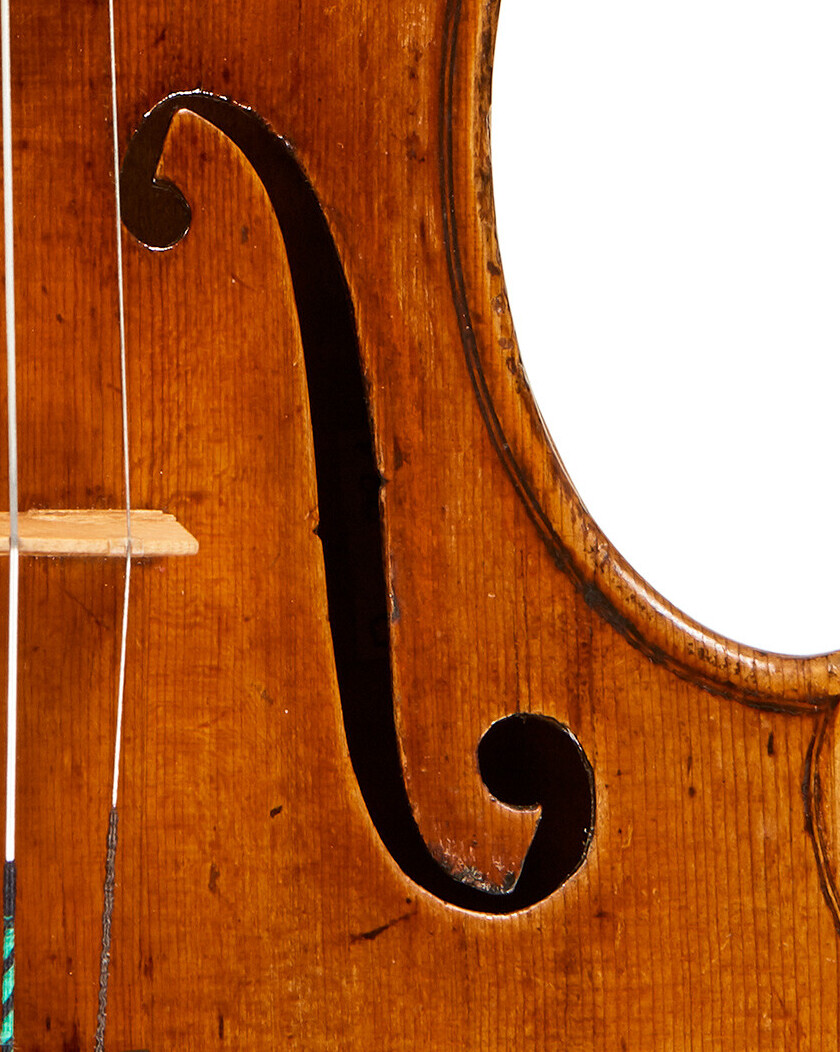
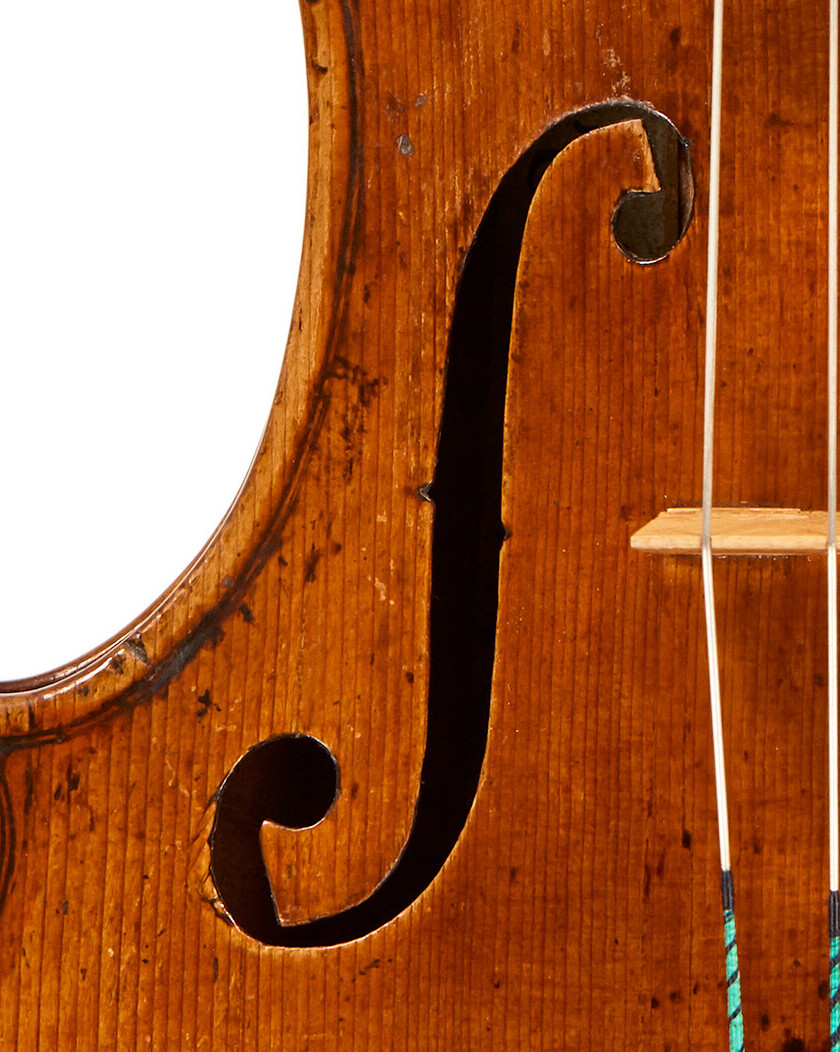
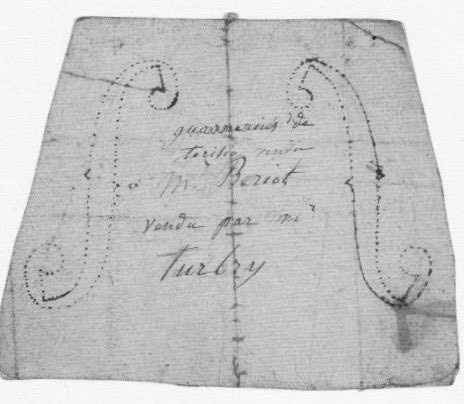
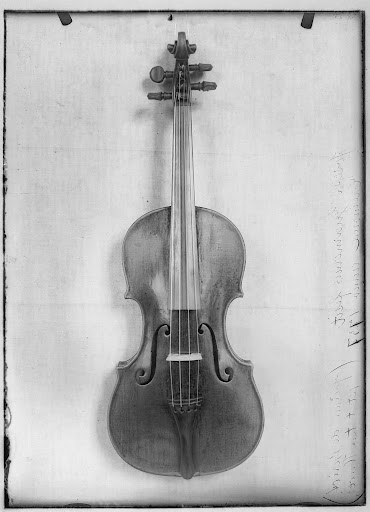
The ‘de Bériot’ soundholes have fascinated experts for generations. A few years ago, Michael Baumgartner, who is writing the definitive monograph on Guarneri del Gesù, sent me a tracing of the ‘de Bériot’ soundholes that he found in papers from the Chanot workshop. These are unmistakably the eyes of the ‘de Bériot’. Several years ago I found an early 20th century lantern slide of the violin that had come from the archives of the Johann Stüber workshop in The Hague. The soundholes of the ‘de Bériot’ were being studied—and copied—well over a century ago.
If Guarneri sound-hole ‘wings’ are often described as ‘hatched-shaped’, the wings on the ‘de Bériot’ should be called battle-axes. Or perhaps a more graceful analogy is what the Venetians call the ‘ferro di prua’, the iconic iron prow-head at the front of a gondola. Rembert Wurlitzer’s notes on the ‘de Bériot’ put it bluntly: “Fantastic, exaggeratedly crude. Like [the ‘Sainton, Betti’] Guarneri but much rougher. Almost like a caricature.”
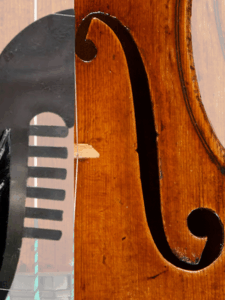
The front of a gondola (ferro di prua) against the soundhole of the ‘de Bériot’ Guarneri del Gesù
Although the soundhole shape may seem like a caricature—or at least a radical departure from tradition—a closer inspection reveals that the upper and lower holes themselves are positioned in the traditional Cremonese fashion. Had the stems and wings been drawn differently, these soundholes would fall squarely within the boundaries of the Cremonese norm. Guarneri was experimenting and pushing limits, but always with anchors to the fundamentals of the tradition.
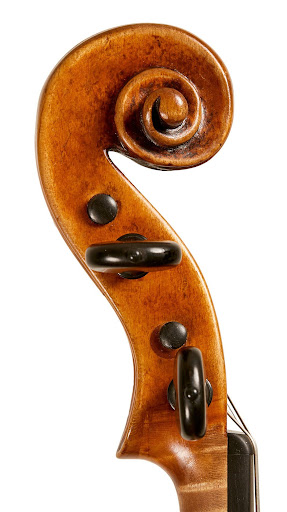
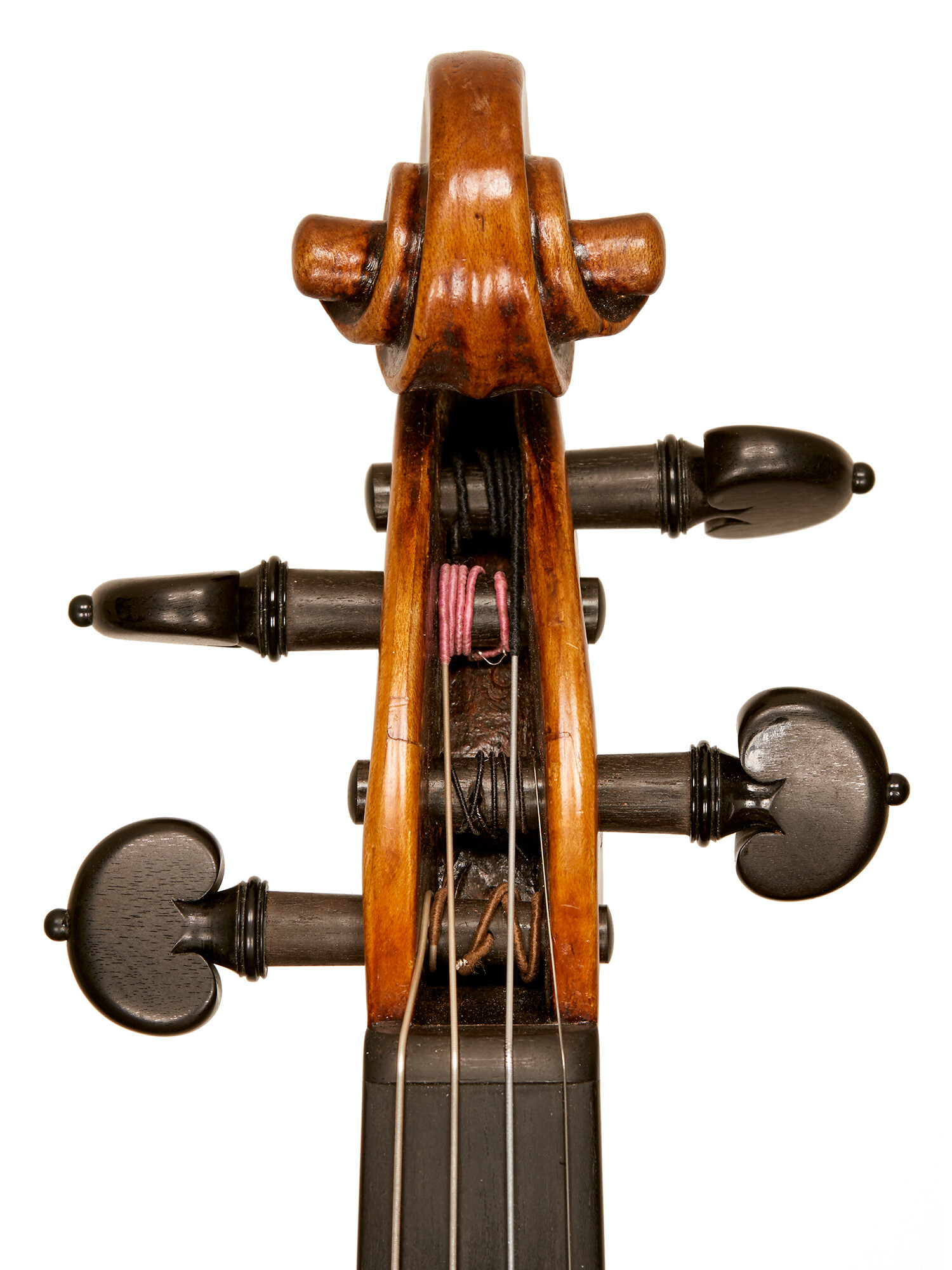
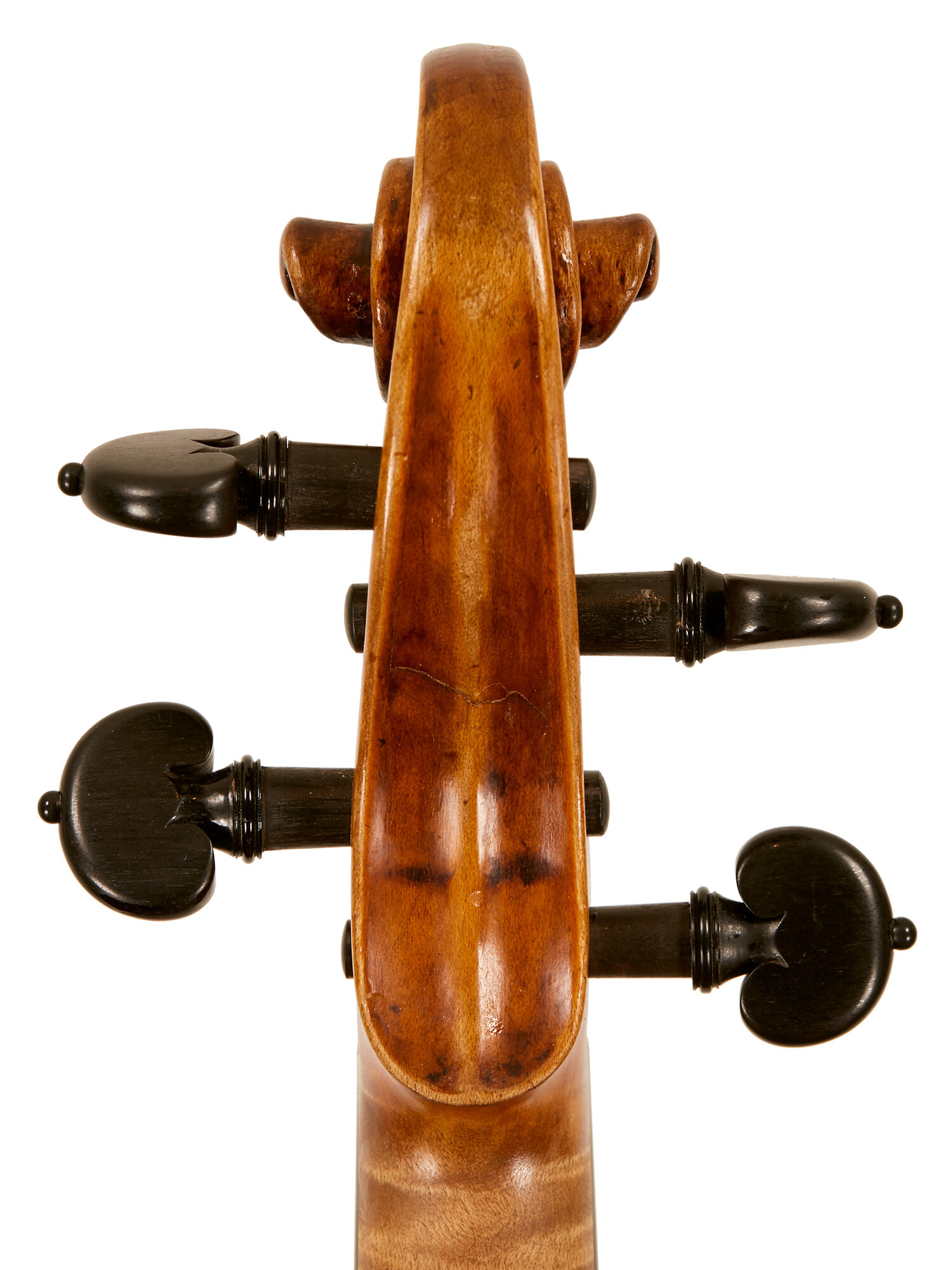
The scroll of the 'de Bériot' Guarneri del Gesù
The label currently in the ‘de Bériot’ is a facsimile that was placed in the violin at Wurlitzers in the early 1960s. The firm’s internal notes described the label that was in the violin when it arrived as “a poor copy dated 1737.” They recognized that the violin dated from the final year of the maker’s life and replaced the “poor copy” with a sophisticated facsimile dated 1744. It includes a detail then known to only a handful of experts: the small stick-like figures—II, III or similar—that sometimes appear on genuine del Gesù labels, perhaps as a batch count or other workshop notation.
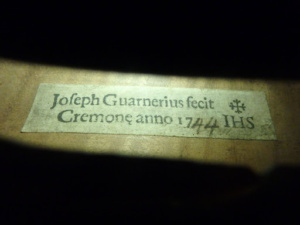
Labeled, “Joseph Guarnerius fecit, Cremona anno 1744.”
The violin takes its name from Charles-Auguste de Bériot, the Belgian violinist, composer and pedagogue who owned it until shortly before his death in 1870. De Bériot was a foundational figure in the Franco-Belgian school; his pupils included Henri Vieuxtemps and Heinrich Wilhelm Ernst, and through them his influence carried into the great Belgian violin tradition of the late nineteenth century.
On the Chanot tracing there’s an inscription that hints at how de Bériot acquired the violin, “Guarnerius de Tarisio vendu a M. Bériot. Vendu par Turbry.” François Laurent Hébert Turbry was a French violinist, composer and musical theorist in the early 19th century and a contemporary of de Bériot. He studied violin at the Paris Conservatoire and later played in the orchestras of the Théâtre-Italien and Théâtre du Gymnase-Dramatique. The Chanot notes seem to indicate that the violin came from Luigi Tarisio and was sold to de Bériot by or through Turbry.
Shortly before his death, de Bériot sold the violin to his pupil, Willem Ten Have. It stayed in the Ten Have family for nearly a century before selling in 1963 to Rembert Wurlitzer, then passing through the collections of Boyd B. Ashcraft, Dr. Frederico A. Lehmann and David Josefowitz.
Most recently, the ‘de Bériot’ has entered a vibrant new chapter in the hands of Daishin Kashimoto, First Concertmaster of the Berliner Philharmoniker. Born in London and raised in Japan, the United States, and Germany, Daishin trained at the Juilliard School and the Lübeck University of Music. He established a substantial career as a soloist and chamber musician before joining the Philharmonic in 2009.
“Performing on such a wonderful instrument gives me an extraordinary palette of colors and possibilities. I am delighted to have such an inspiring partner on my musical journey.” – Daishin Kashimoto, First Concertmaster of the Berliner Philharmoniker
Daishin Kashimoto with the 'De Bériot', credit to Asahikasei